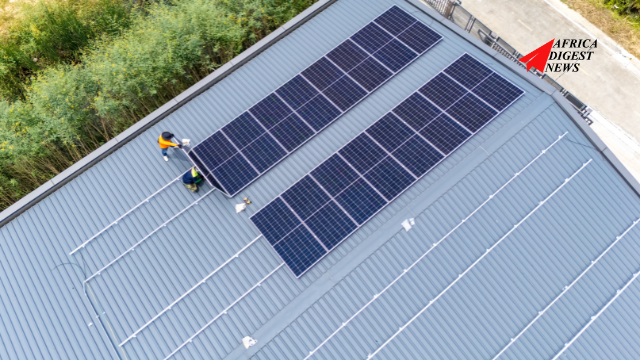
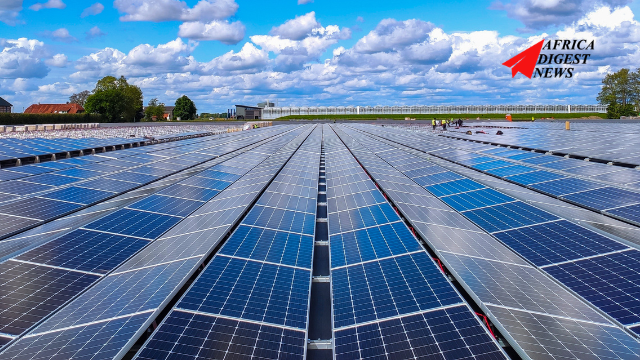
South Africa’s biggest property owners are increasingly building their own energy systems as unreliable municipal infrastructure and rising electricity costs turn power security into a property business issue. Listed real estate investment trusts (REITs) that operate shopping centres, offices and logistics parks are investing in rooftop solar, battery storage, renewable power purchase agreements and energy-wheeling arrangements. The shift means energy is no longer simply an operating expense that property companies pay to a utility; it is becoming part of how they protect the performance of their assets.
Growthpoint Properties illustrates the scale of the change. By the end of its 2026 financial year, the company had 69.31 MWp of solar capacity across 98 plants after investing more than R1 billion in its renewable-energy programme. Solar supplied about 19% of its electricity consumption during the year, while a renewable power purchase agreement is expected to provide about 195 GWh annually when fully implemented. Growthpoint has also developed a pooled wheeling model with Etana Energy and the City of Cape Town, allowing renewable electricity generated away from individual properties to be allocated across multiple sites.
Other property groups are following a similar path. Resilient REIT expects its solar capacity to reach 94.4 MWp, potentially supplying about 43.2% of its electricity requirements, while 30.7 MWh of battery storage was already operational by June. Redefine had expanded solar capacity to 62 MWp and was advancing both short-term and long-term wheeling arrangements, while Hyprop and Attacq had also increased their solar capacity. Attacq, for example, had 18.5 MWp of rooftop solar and 5.3 megalitres of backup water capacity, supported by digital monitoring through its Smart Utility Hub.
The economics are helping accelerate the shift. Falling costs for solar, batteries and smart-metering technology have improved project payback periods at the same time that grid electricity tariffs have risen. For property owners, the value extends beyond reducing electricity purchases: reliable power can protect tenants from disruptions, reduce reliance on diesel backup generation and support the continued operation of shopping centres, offices and logistics facilities. Water security is being treated in much the same way, with boreholes, rainwater harvesting, storage, recycling and leak detection increasingly used to reduce exposure to deteriorating municipal networks.
Read Also: Why Egypt Is Linking Its Wind Boom to a Turbine Manufacturing Industry
That is turning sustainability investment into a question of asset performance and capital allocation. A building with its own generation, storage and water resilience can be less exposed to infrastructure disruptions and volatile operating costs, while tenants increasingly have an interest in reliable services. South African REITs are therefore moving from simply reporting environmental performance toward designing properties around infrastructure resilience. Solar panels and batteries are becoming part of the physical and financial architecture of the property business, alongside the traditional concerns of occupancy, rental income and asset value.