South Africa’s energy transition is increasingly becoming an investment question measured in trillions of rand. Studies examining the country’s electricity pathways to 2050 estimate that developing a lower-carbon power system could require between R3.6 trillion and R4.2 trillion in system investment over the period from 2025 to 2050. The debate is therefore moving beyond how South Africa can add enough generation to meet demand and toward what kind of electricity system the country should build as its ageing coal fleet declines.
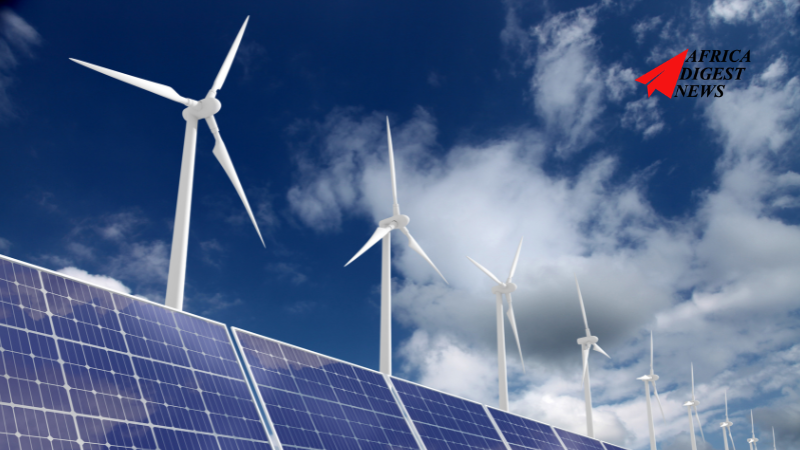
One scenario examined in recent planning work points to a substantially different generation mix by 2050. Solar photovoltaic capacity could reach about 99 GW, wind around 48 GW and battery storage approximately 53 GW, alongside roughly 23 GW of flexible gas capacity. Coal generation would shrink from about 37 GW in 2025 to around 10 GW, with the remaining fleet largely retrofitted or repurposed. Under this pathway, the system is built around large volumes of variable renewable generation supported by storage and flexible generation rather than new long-lived coal or nuclear capacity.
The investment is also being framed as an industrial opportunity rather than simply a power-sector replacement programme. The expansion of solar, wind, batteries, electric vehicles and green hydrogen could create demand for local manufacturing, assembly, engineering and services, while new infrastructure would support industries seeking lower-carbon electricity. The estimated financing requirement is equivalent to roughly 1.5–2.4% of GDP annually when operating costs are included, highlighting the scale of capital that would need to be mobilised from both public and private sources.
Read Also: Why Egypt Is Linking Its Wind Boom to a Turbine Manufacturing Industry
The alternative carries a different set of financial risks. Continued investment in long-lived fossil-fuel infrastructure could face increasing pressure from carbon pricing, tighter climate rules, international financing conditions and mechanisms such as the European Union’s Carbon Border Adjustment Mechanism. For South African industries competing in export markets, the carbon intensity of electricity and production could increasingly affect costs and market access. This creates a risk that infrastructure built to provide energy security today could become more difficult or expensive to operate and finance over its intended lifetime.
The transition, however, is not only about choosing technologies or raising capital. South Africa also has to manage the social consequences of a declining coal industry while ensuring that new clean-power investment does not translate into electricity that is inaccessible or unaffordable for lower-income households. That means combining private investment and corporate power procurement with public infrastructure, worker retraining, support for coal-dependent communities and measures that protect consumers. The scale of the investment means the decisions made now will shape not only South Africa’s electricity mix, but also the costs, industrial structure and liabilities of its energy system for decades.