Nigeria is putting US$300 million behind a strategy that accepts a difficult reality: expanding the national grid alone will not solve the country’s electricity problem. The Nigeria Distributed Renewable Energy Fund, co-managed by the Nigeria Sovereign Investment Authority and Africa50, is designed to finance mini-grids, standalone solar, battery storage and commercial and industrial distributed energy. With an initial US$25 million commitment from the World Bank, the fund is moving distributed power from the margins of Nigeria’s electricity strategy toward a much larger investment market.
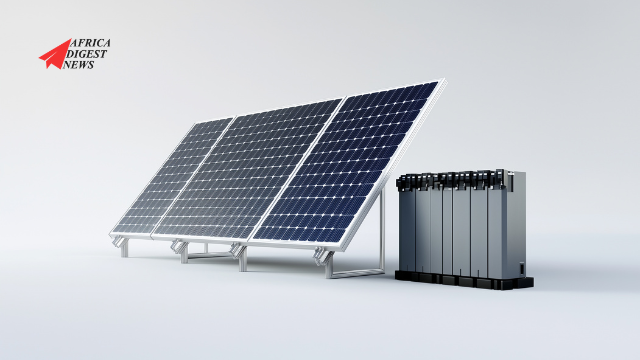
The technical logic is straightforward. Extending a centralised grid to every underserved community requires generation capacity, transmission infrastructure, distribution networks and connections all the way to the final customer. In remote or sparsely populated areas, the cost of that infrastructure can be difficult to justify against the amount of electricity that can initially be sold. A solar mini-grid changes the architecture. Generation, storage and distribution can be deployed close to the load, reducing the distance electricity has to travel and allowing investment to be matched more closely to local demand. Standalone solar can go further by removing the grid connection entirely for customers whose needs can be met through decentralised systems.
The fund is also aimed at a problem beyond household electricity access: productive power. Nigerian businesses already spend heavily on diesel and other backup generation because an unreliable grid imposes a cost on operating machinery, refrigeration, telecommunications, workshops and other equipment. Distributed renewable systems can combine solar PV, batteries and, where necessary, other generation sources to provide a more predictable electricity supply. For commercial and industrial customers, the value proposition is therefore not simply replacing grid electricity with solar. It is reducing exposure to unreliable supply and fuel costs while giving businesses greater control over when and how electricity is consumed.
The structure of the fund matters because it is designed to invest equity directly into Nigerian distributed-energy developers rather than simply subsidising individual customers. That gives developers capital to build larger portfolios of projects and potentially use those equity investments to attract additional debt. The distinction is important: Africa does not only need more individual solar systems; it needs companies capable of developing, financing, operating and maintaining thousands of systems and mini-grids. A well-capitalised developer can standardise equipment, aggregate customers, build operating expertise and create a portfolio that lenders can evaluate rather than treating every small project as a separate transaction.
Read Also: Morocco Is Selling Solar Power Below $0.03. How Is That Possible
Nigeria is therefore testing whether distributed energy can become an investable infrastructure asset class rather than a collection of isolated access projects. The US$300 million target will not by itself close the country’s electricity gap, and execution will determine whether the fund creates durable capacity or simply another pipeline of announced projects. But the architecture is significant: public and development capital is being used to strengthen local developers, while private capital can potentially follow into projects with clearer revenue models and stronger operators. If the model works, Nigeria’s electricity system will not be defined only by how much power the national grid can generate and transmit. It will increasingly depend on how effectively centralised and distributed systems work together.