Rwanda’s renewable-energy debate is running into a problem that has little to do with whether solar panels work. The question is whether the companies selling them can prove that they can keep the systems working after installation. During a Senate committee discussion, private solar companies asked the government to allow them to install systems in public institutions and factories without upfront payment, then recover their costs by charging users for the electricity consumed. Senators pushed back, arguing that companies should first prove their solutions in private businesses before asking the state to provide demonstration sites.
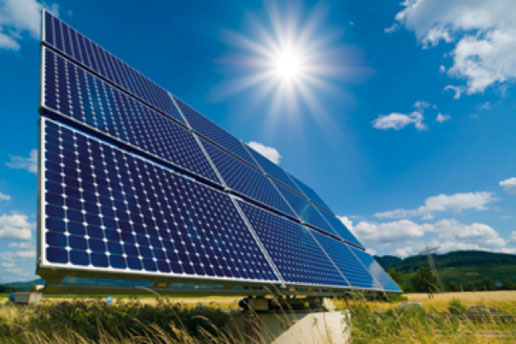
The proposal from Abundio Energy CEO Methode Maniraguha reflects a familiar challenge in emerging energy markets: convincing customers that a new technology can handle real commercial loads. Under the proposed energy-as-a-service model, companies would install solar systems at no initial cost and charge customers for the power they use. That could make solar easier for businesses and public institutions to adopt, particularly where the upfront capital requirement is the main barrier. But the senators’ response was essentially: prove it with your own customers first.
That scepticism is partly about what happens after the installation. Senator Penine Uwimbabazi questioned why private companies should use public institutions to demonstrate their systems when they could first test them among businesses in the Private Sector Federation. Senator Frank Habineza raised another problem: customers can be left with solar equipment that stops working after payment, with nobody clearly responsible for maintenance. In other words, Rwanda’s renewable-energy market may not only have a financing problem. It has a service and accountability problem. Installing a panel is the easy part; keeping the system productive for years is what determines whether the investment actually works.
Developers are also facing problems further up the power chain. Rwanda has sites capable of producing 5 MW to 20 MW of hydropower, but some investors struggle to secure power-purchase agreements that make those projects bankable. At the same time, prolonged dry periods are reducing river flows, meaning a plant designed for 5 MW may produce only 2 MW or operate for fewer hours. For off-grid companies, expensive collateral requirements are making financing harder to obtain. These are not technology problems. They are problems of contracts, climate risk, finance and who carries responsibility when the original assumptions change.
Read Also: Can Namibia Turn Green Hydrogen Into Real Industrial Growth
That makes the Senate’s challenge more useful than simply saying Rwanda needs more renewable energy. A renewable project becomes valuable when someone can finance it, someone agrees to buy its output, and someone remains responsible for keeping it operational. Rwanda can build a larger clean-energy market, but government cannot be expected to absorb every technology and business-model risk on behalf of private companies. If solar firms can demonstrate reliable systems in private businesses, provide credible maintenance and build commercially viable contracts, public institutions become a much easier market to enter. The next stage of Rwanda’s renewable-energy transition may therefore depend less on proving that solar works and more on proving that the companies behind it can make it work.