Concentrated solar power (CSP) was once seen as a serious contender to become a major source of utility-scale renewable electricity. Instead of converting sunlight directly into electricity like solar photovoltaic (PV) panels, CSP uses mirrors to concentrate sunlight, produce heat and then drive a conventional power cycle. The technology has an important advantage: with thermal storage, it can continue producing electricity after sunset. But that advantage comes with a price. CSP plants are more complex, expensive and demanding to build than PV projects, while the rapid fall in PV and battery costs has made it increasingly difficult for CSP to compete in ordinary solar markets.
The first problem is where CSP can be built. CSP depends heavily on direct normal irradiance (DNI), meaning sunlight that reaches the mirrors directly rather than being scattered by clouds, haze or humidity. This limits viable projects to areas with exceptionally strong solar resources. The plants also require large, relatively flat and unobstructed sites, usually with access to transmission infrastructure. PV is much more forgiving: panels can use both direct and diffuse sunlight and can be installed on rooftops, smaller parcels of land and closer to electricity demand. That gives PV a much larger potential market and makes it easier to deploy incrementally.
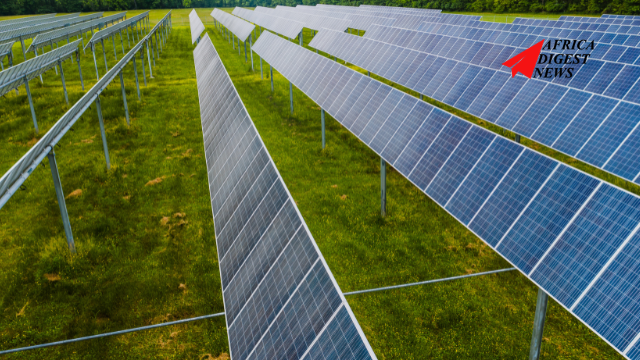
Then there is cost and complexity. A PV plant is fundamentally a field of semiconductor modules connected to inverters and electrical equipment. A CSP plant can involve thousands of tracking mirrors, receivers operating at very high temperatures, heat-transfer systems, turbines, pumps, piping and, in modern designs, large thermal-storage systems. Each additional component creates another source of capital expenditure, maintenance and failure risk. PV, meanwhile, has benefited from enormous global manufacturing scale and standardisation, allowing its costs and construction times to fall dramatically. For straightforward daytime electricity, that cost advantage is difficult for CSP to overcome.
CSP also faces a difficult water and operating environment. Conventional CSP plants using steam turbines can require substantial cooling, while the mirrors themselves may need regular cleaning in dusty, high-solar-resource locations. Dry cooling can reduce water consumption, but it can increase costs and reduce efficiency, particularly during hot conditions. The plants are also mechanically and thermally more complicated than PV systems, requiring specialised operators and maintenance. In addition, large mirror fields can create land-use, habitat and wildlife concerns, adding another layer of environmental and regulatory risk to projects.
Read Also: What Ivanpah’s Failure Really Teaches the Solar Industry
The irony is that CSP’s biggest advantage is also the reason it still has a future. CSP is not necessarily competing with PV on the question, “Who can produce the cheapest electricity at noon?” PV has largely won that battle. The more interesting question is, “Who can deliver solar electricity when the grid actually needs it?” With thermal storage, CSP can capture heat during the day and release it later, potentially providing long-duration, dispatchable electricity without relying entirely on batteries. That makes CSP potentially valuable in grids that need evening power and long-duration storage. The lesson is therefore not that CSP is obsolete, but that it needs to be deployed where its unique ability to store and dispatch solar energy is worth paying for.