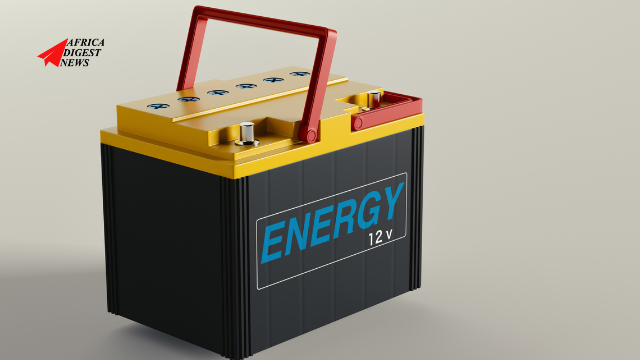
With an increasing focus on renewable energy, particularly solar, the market for solar battery storage systems has expanded considerably.
For consumers and businesses in Kenya looking to invest in solar power, understanding the current pricing trends and factors influencing the cost of solar batteries in 2026 is crucial for making informed decisions.
The pricing of solar batteries in Kenya is influenced by several key factors, including the battery chemistry, capacity (measured in kilowatt-hours, kWh), cycle life, depth of discharge (DoD), warranty period, brand reputation, and the prevailing import duties and taxes.
While initial costs can be a significant consideration, the long-term benefits of energy independence, reduced electricity bills, and environmental sustainability often outweigh the upfront investment.
Lithium-ion batteries, especially those utilizing Lithium Iron Phosphate (LiFePO4) technology, dominate the Kenyan market due to their superior performance characteristics. These include a longer operational lifespan (typically 4,000 to 8,000 cycles), higher energy efficiency, and enhanced safety features compared to older lead-acid alternatives.
Although LiFePO4 batteries have a higher initial price point, their extended durability and minimal maintenance requirements often result in a lower total cost of ownership over their operational life.
For residential applications, solar battery capacities typically range from 5 kWh to 15 kWh. In 2026, the price for a high-quality 5 kWh LiFePO4 battery from a reputable brand in Kenya can range from KES 250,000 to KES 400,000 (approximately USD 1,800 to USD 2,900, depending on the exchange rate).
For larger residential systems requiring 10 kWh to 15 kWh, prices could fall between KES 500,000 and KES 800,000 (approximately USD 3,600 to USD 5,800). These figures generally cover the battery unit itself and may not include installation costs, inverter compatibility components, or any necessary electrical upgrades.
Commercial and industrial (C&I) applications often necessitate much larger battery capacities, ranging from 50 kWh to several megawatt-hours (MWh). For these larger systems, pricing is typically provided on a per-kWh basis, which can fluctuate based on the project’s scale and the specific technology deployed.
For instance, a 100 kWh LiFePO4 battery system for a commercial entity might cost between KES 4,500,000 to KES 7,000,000 (approximately USD 32,500 to USD 50,000). These prices reflect the economies of scale and the more sophisticated integration required for large-scale C&I solutions.
Prominent brands in the Kenyan solar battery market include Pylontech, BYD, Huawei, and Victron Energy. Pylontech is highly favored for its modularity and compatibility with various inverter brands, allowing for flexible capacity expansion. BYD’s high-voltage battery systems are recognized for their efficiency in larger installations, while Huawei offers integrated solar and storage solutions that streamline energy management. Victron Energy provides robust and flexible systems, often preferred for complex off-grid and hybrid setups.
When evaluating solar battery options, it is essential to consider the warranty period, which typically spans 5 to 10 years for lithium-ion batteries, and the expected cycle life. A longer cycle life indicates more years of reliable operation before significant capacity degradation. The depth of discharge (DoD) is also a critical specification; most LiFePO4 batteries allow for a DoD of 80-100%, maximizing usable energy. Installation costs, which can vary significantly based on system complexity and location, should also be factored into the total investment.
Read Also: Engie and Pele Green Energy Power Up the National Grid with New Solar Capacity
Government policies and incentives, though still evolving, are gradually making solar battery systems more accessible. The long-term financial benefits, such as reduced reliance on grid electricity and protection against power outages, further strengthen the economic case for solar battery adoption in Kenya. As technology continues to advance and local expertise grows, the market anticipates a continued reduction in per-kWh costs, making energy storage an increasingly integral component of Kenya’s sustainable energy future.
By Thuita Gatero, Managing Editor, Africa Digest News. He specializes in conversations around data centers, AI, cloud infrastructure, and energy.


