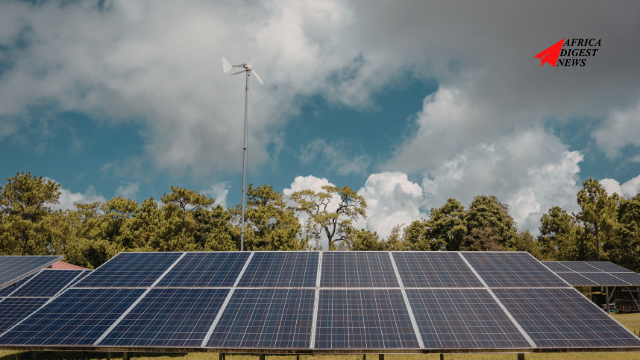
In rural Zambia, access to electricity has often meant access without economic change. Many communities receive power but lack the equipment and financing needed to use it in ways that generate income. A new rural electrification effort is attempting to address that gap directly.
The Powering 1000 Communities initiative, led by Sustainable Energy for All and the Global Energy Alliance for People and Planet with support from The Rockefeller Foundation, is expanding solar mini-grids across underserved regions while encouraging productive electricity use alongside new connections.
That distinction matters. More than half of Zambia’s population still lives with limited or no reliable electricity access. While grid coverage reaches most major towns, only about 34 percent of rural households are connected. At the same time, hydroelectric power supplies more than 80 percent of national generation. Repeated drought conditions have exposed the limits of relying heavily on a single energy source.
As of 2024, Zambia’s peak electricity demand reached roughly 2,400 MW, while available generation stood near 1,040 MW. The shortfall continues to affect households and businesses across the country. Mini-grids are now being positioned as part of the response. Through the Zambia Energy Demand Stimulation Incentive programme, private developers are being encouraged not only to install solar systems but also to support equipment that increases electricity consumption inside connected communities.
This includes milling machines for farmers, cold storage for small enterprises, and charging infrastructure for households. Early results show customers participating in the programme consume several times more electricity than households with access alone. That increase strengthens the financial position of mini-grid operators. Higher usage improves project revenue and makes rural electrification more attractive to investors who previously viewed off-grid deployment as high risk.
Read Also: Renewable Energy Is Becoming the Foundation of Digital Connectivity in Remote African Regions
The initiative also introduces a planning framework that combines grid extension, mini-grids, mesh systems, and standalone solar solutions into a single national strategy coordinated with the Rural Electrification Authority. This allows electrification planning to move beyond individual projects toward regional clusters designed around long-term service delivery.
Data coordination is also improving through a geospatial working group linking government agencies involved in national electrification planning. Electricity access alone does not change rural economies. Electricity used for production does. By linking mini-grid deployment to agricultural processing and small-business activity, Zambia is testing whether rural electrification programmes can move from infrastructure expansion toward income expansion.
That shift determines whether energy access reduces poverty or simply changes lighting conditions.
By Thuita Gatero, Managing Editor, Africa Digest News. He specializes in conversations around data centers, AI, cloud infrastructure, and energy.