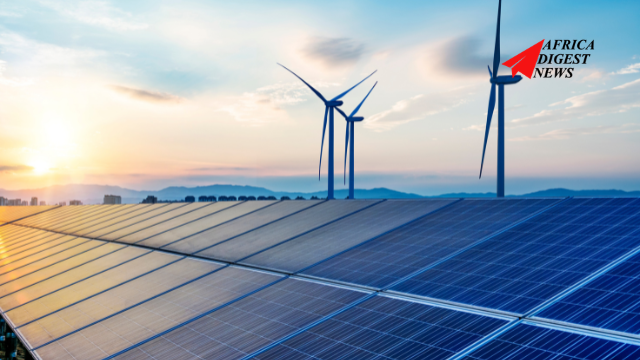
Tunisia is preparing a 2.3 GW combined solar and wind tender in 2026. Eswatini is launching a 20 MW PV project under its first IPP programme. The gap in size does not matter. Both show that North Africa and smaller Southern African states are moving from planning to binding tenders, long‑term contracts, and physical construction.
Tunisia: 2.3 GW of Wind and Solar in One Pipeline
Tunisia has approved more than 2.3 GW of renewable capacity to be tendered in 2026. The mix is:
- 2 GW of wind across multiple sites: Tabaga (600 MW), Jebel Abderrahmane in Nabeul (400 MW), El Guettar in Gafsa (200 MW), plus future sites in Zaghouan, Medenine, and Kasserine once wind measurements are complete
- 350 MW of solar PV in Bazma, Kebili, designed with battery storage to improve grid stability
This is not a list of concepts. The High Committee for Private Electricity Generation has cleared the tenders. The next step is bidder selection, PPAs, and construction.
The strategic purpose is clear:
- Reduce reliance on imported fossil fuels
- Lower the energy deficit
- Move toward 35% renewable electricity by 2030
The pipeline uses private generation models, which means external capital and expertise are already in the system. The state sets the framework; the market delivers the projects.
Eswatini: 20 MW Tsamela as the First IPP Under a 75 MW Programme
Eswatini’s 20 MW Tsamela solar project is the first of five sites under ESERA’s 75 MW Solar PV procurement programme. Key facts:
- Developer: Anthem (South African IPP)
- Offtaker: Eswatini Electricity Company (EEC), under a 25‑year PPA
- Total cost: over SZL 400 million (about $23.6 million)
- Financing: debt led by Standard Bank (Eswatini and South Africa), 30% local equity, 30% local debt
- Construction: started in April 2026
- Target commercial operation: July/August 2027
- First‑year output: 47,788 MWh, offsetting 4.8% of Eswatini’s electricity imports
This is not a pilot. It is the opening of a structured IPP market. The regulator has already selected a developer, signed a long‑term PPA, closed financing, and started construction. The next four projects will follow the same model.
Strategically, the project aims to:
- Increase domestic generation
- Reduce dependence on imported power
- Build a track record for private developers in Eswatini
Together with Anthem’s 13.5 MW Lower Maguduza hydro project, Tsamela will contribute to just over 30% of Eswatini’s internal generation capacity once both are operational.
Both Tunisia and Eswatini use the same core tools:
- Competitive tenders or procurement processes
- Long‑term PPAs (25 years in Eswatini; expected multi‑year power contracts in Tunisia)
- Private developers as the main builders
- Bank financing from regional and international lenders
Tunisia is scaling utility‑grade wind and solar. Eswatini is scaling smaller but still bankable IPP projects. The difference in size comes from grid capacity and demand, not from a lack of ambition.
The effect is immediate:
- Capital is locked in (Anthem’s 20 MW project has reached financial close)
- Construction is underway (Tsamela started in April 2026; Tunisia’s tenders are active in 2026)
- Future pipelines are visible (75 MW in Eswatini, 2.3 GW in Tunisia)
This is not “hope for solar.” This is solar on the ground and on the books.
These projects show that Africa’s energy transition is not all about one country or one model. Tunisia is a mid‑size, grid‑connected market pushing gigawatts. Eswatini is a small, import‑dependent market launching its first IPP programme. Both are solving the same problem: they need more reliable, cheaper, cleaner power, and they are using private capital to deliver it.
The shared model is:
- Regulators set the rules and select developers
- Government or state utilities sign long‑term contracts
- Private investors and lenders fund construction
- Projects deliver power that reduces imports or displaces fossil generation
This is a repeatable framework. Other countries can copy it as long as they keep the rules clear and the contracts enforceable.
If you are an investor, treat both cases as proof of concept. Tunisia shows that large, multi‑hundred‑MW tenders can be launched. Eswatini shows that smaller, 20–30 MW IPP projects can close finance and build. Your next step is to map which developers, EPCs, and lenders are already active, and structure deals that match their execution speed.
If you are a corporate or public buyer, this is a direct invitation. You can back solar now, with clear PPAs, clear off‑takers, and clear technology. The financing model exists. The regulatory model exists. The question is your willingness to move.
If you are a policy maker, this is a benchmark. Tunisia and Eswatini are already using tenders, PPAs, and private capital to deliver. Your role is to keep the rules stable, speed approvals, and avoid sudden changes that delay projects.
Tunisia’s 2.3 GW tender and Eswatini’s 20 MW plant are not isolated news items. They are markers of a market that has moved from planning to building. The rest of the continent must match that pace.
Tunisia’s plan to tender 2 GW of wind in 2026 is not a planning exercise. It is a real integration challenge. The technical issues are not theoretical. They are the same issues that have stopped wind projects in the past from moving to construction and operation.
Grid Capacity and Transmission
The first challenge is whether the grid can absorb 2 GW of new wind without collapsing. Tunisia’s grid is already stretched under high demand and limited imports. Adding large wind sites in the south (Tabaga, Kebili; El Guettar, Gafsa) and east (Jebel Abderrahmane, Nabeul) requires:
- New transmission lines to connect remote wind farms
- Grid reinforcement to avoid congestion and overload
- careful planning of injection points to match existing capacity
If transmission is not built in parallel with wind, projects will be delayed or blocked. The approved measure to launch additional tenders only after wind measurement studies in Zaghouan, Medenine, and Kasserine is a signal that technical viability must be proved before contracts are signed.
Variability and Grid Stability
Wind power is variable. It does not produce steadily. The grid must manage:
- Sudden drops in output when wind slows
- Surges in output when wind strengthens
- Frequency and voltage fluctuations caused by fast changes in power
Tunisia’s 2.3 GW tender includes solar projects in Bazma, Kebili that will integrate battery storage to improve stability. This is a direct response to the variability problem. The same logic will apply to wind: storage or hybridisation will likely be required at some sites to keep the grid stable. Without this, the grid operator (STEG) cannot safely accept large volumes of wind.
STEG’s Technical Capacity and Procedures
STEG is the national utility and grid operator. It must:
- Connect large wind farms to the grid
- Manage power flows, dispatch, and maintenance
- Run procurement processes for PPAs and contracts
GIZ’s work in Tunisia explicitly notes that integrating solar and wind plants poses technical and regulatory challenges for STEG. The project is designed to strengthen STEG’s technical expertise in connecting large renewable plants and to modernise grid design to handle fluctuating renewable electricity. If STEG does not scale its capacity, the 2 GW target will be at risk.
Site Measurement and Data Quality
Tunisia’s plan to conduct wind measurement studies in Zaghouan, Medenine, and Kasserine before issuing additional tenders is technical in nature. Reliable wind data is required for:
- Energy yield assessments
- Financial modelling
- Risk quantification for lenders and investors
Without accurate wind data, projects will be under‑ or over‑estimated. This leads to financing gaps, poor revenue projections, and operational failures. The requirement to finish measurement studies before tendering additional sites is a safeguard against building on incorrect assumptions.
Regulatory and Administrative Barriers
Integration is not purely technical. It is also regulatory. Private investors are held back by:
- Administrative obstacles in permitting and approvals
- Unclear or slow procedures for grid access
- Regulatory uncertainty around power contracts and tariffs
GIZ notes that private companies are currently held back by administrative obstacles, and that the integration of wind power poses regulatory challenges for STEG. Without clear, fast, and stable rules, the 2 GW pipeline will stall even if the grid is technically ready.