Africa sits on one of the world’s greatest untapped energy reserves. It is not beneath the oceans. It is not hidden inside oil fields. It lies beneath the ground. Deep below the Earth’s surface, rocks remain extremely hot because of heat generated within the planet. In certain regions, that heat rises close enough to the surface that it can be converted into electricity or used directly for industrial processes.
That resource is geothermal energy. Unlike wind, which depends on weather, or solar, which depends on daylight, geothermal power operates continuously. Day. Night. Dry season. Rainy season. The Earth’s internal heat never stops.
That single characteristic makes geothermal one of the few renewable energy sources capable of supplying dependable, around-the-clock electricity. The technology is valued for its high availability and ability to provide firm power to the grid.
What Is Geothermal Energy?
Geothermal energy is heat stored beneath the Earth’s surface. The word itself combines two Greek words:
- Geo meaning Earth.
- Therme meaning heat.
This heat originates from the Earth’s formation and the continuous decay of naturally occurring radioactive elements deep within the planet. In regions where underground temperatures become sufficiently high, groundwater is heated into hot water or steam.
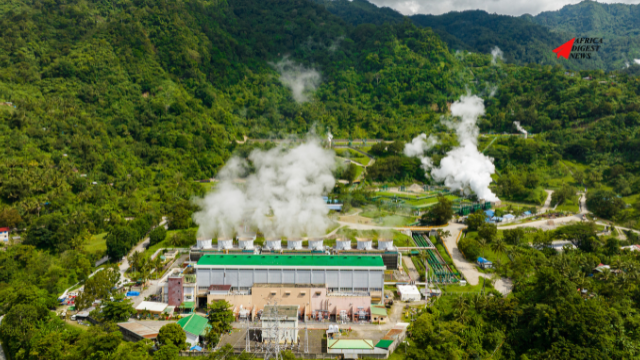
Engineers drill wells into these underground reservoirs. The steam or hot water reaches the surface. That energy drives turbines connected to generators. Electricity is produced. After use, the cooled water is commonly reinjected underground so the geothermal reservoir can continue operating sustainably.
Why Africa Has Exceptional Geothermal Resources
Not every country can develop geothermal energy. The geology has to cooperate. Africa possesses one enormous geological advantage. The East African Rift System.
Stretching for roughly 6,400 kilometres from the Red Sea through countries including Djibouti, Ethiopia, Kenya, Uganda, Rwanda, Tanzania, Malawi and Mozambique, the rift is one of the most active tectonic regions on Earth. As the Earth’s crust slowly separates, heat rises closer to the surface, creating ideal conditions for geothermal development.
That is why many of Africa’s geothermal projects are concentrated along this corridor. The resource already exists. The engineering challenge is learning how to access it efficiently.
Why Kenya Leads Africa
Over several decades, Kenya invested heavily in geothermal exploration, drilling and power generation.
Today, geothermal energy supplies a substantial share of the country’s electricity and has reduced dependence on hydropower during drought periods. This long-term investment has made Kenya one of the world’s leading geothermal producers.
Kenya’s experience demonstrates an important lesson. Geothermal success does not happen because a country possesses underground heat. It happens because governments invest in exploration, drilling expertise, transmission infrastructure and long-term planning.
Why Geothermal Matters
Electricity systems require stability. Factories cannot stop operating because clouds appear. Hospitals cannot suspend critical equipment because the wind becomes calm.
Data centres require uninterrupted power every second of the day. Geothermal addresses this challenge. Unlike solar or wind, geothermal plants often operate at very high capacity factors because the heat source remains available continuously. This makes geothermal an important source of firm electricity that complements variable renewable generation.
That does not make geothermal “better” than wind or solar. It makes it different. Each technology solves a different problem.
Beyond Electricity
Many people associate geothermal energy only with power generation. That overlooks much of its value.
Moderate-temperature geothermal resources can supply heat directly for:
- Food processing
- Greenhouse agriculture
- Milk pasteurisation
- Fish farming
- Industrial drying
- Tourism and wellness facilities
- District heating systems
Using geothermal heat directly often avoids the need to convert heat into electricity first, improving overall energy efficiency. IRENA identifies direct-use applications as a major opportunity for East Africa. For developing economies, this creates opportunities far beyond electricity production.
Why Isn’t Every African Country Using Geothermal?
The answer is geology. Commercial geothermal resources occur only where underground heat reaches economically accessible depths. Even where suitable geology exists, development takes time.
Before construction begins, developers must:
- Study the geology.
- Measure underground temperatures.
- Drill exploration wells.
- Confirm reservoir size.
- Assess environmental impacts.
- Secure financing.
- Build power plants.
- Connect them to the electricity grid.
Exploration drilling alone can cost millions of dollars, and there is always the possibility that a well will not produce enough steam to justify further investment. That exploration risk remains one of the industry’s biggest barriers.
The Countries to Watch
Kenya remains Africa’s geothermal leader. But it is no longer alone. Countries including Ethiopia, Djibouti, Tanzania, Uganda and Zambia continue exploring geothermal resources, while additional work is taking place elsewhere along the East African Rift. IRENA notes that much of the region’s geothermal potential remains undeveloped despite encouraging exploration results.
The opportunity extends well beyond today’s operating power plants.
The Future of Geothermal Energy in Africa
Africa’s electricity demand continues to grow. Urbanisation is accelerating. Manufacturing is expanding. Digital infrastructure requires dependable power. Meeting that demand with imported fossil fuels alone exposes economies to fuel price volatility and supply disruptions.
Geothermal offers another path. Once a field has been proven and infrastructure constructed, the resource provides locally sourced electricity that is available around the clock. It does not replace solar. It does not replace wind. It strengthens them.
A modern electricity system is built from complementary technologies, not competing ones. Africa possesses abundant sunshine. Strong wind corridors. Hydropower resources. Growing battery storage.
And beneath the East African Rift, one of the world’s richest geothermal systems. The continent’s long-term energy future will depend less on discovering new resources than on developing the ones it already has.