South Africa remains the central market for renewable energy investment on the African continent, according to new findings from Forvis Mazars’ Powering Africa’s Future energy report.
The study points to a deep pipeline of investable projects across wind, solar, biofuels and green hydrogen, underpinned by policy frameworks that continue to attract both domestic and international capital.
The report places South Africa ahead of its peers not simply because of resource availability, but because of institutional structure. Abundant solar irradiation and strong wind corridors are important, but investors continue to prioritise markets where procurement, regulation and grid access are predictable. In that regard, South Africa still stands apart.
Johan Marais, Director at Forvis Mazars South Africa, notes that recent policy developments have reinforced the country’s position. The Renewable Energy Independent Power Producer Procurement Programme (REIPPPP), despite delays in some bid windows, remains the continent’s most established competitive auction system. It has created a repeatable process for project development, financing and grid connection that lenders understand and trust.
The numbers support that assessment. Renewable energy generation in South Africa exceeded 50 terawatt-hours in 2024, drawn from a mix of hydroelectric, wind, solar and other renewable sources.
Solar capacity across Africa grew by 25 percent during the year, with Southern Africa accounting for a significant share of that expansion. South Africa alone generated roughly 8 TWh from solar and 9 TWh from wind, reinforcing its role as the region’s anchor market.
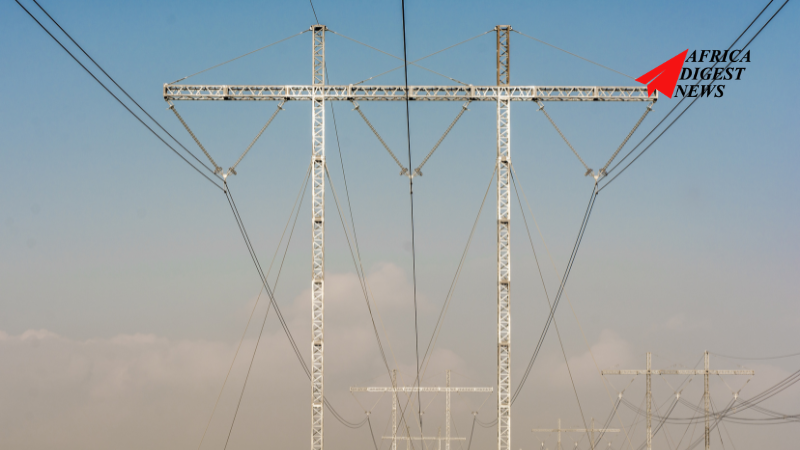
The report also highlights how South Africa’s energy transition has been driven as much by necessity as by climate policy. Chronic grid constraints and load shedding have forced faster adoption of private and utility-scale renewables. Regulatory reforms allowing private generation, wheeling arrangements and improved grid planning have expanded the scope of viable projects beyond state procurement.
Beyond power generation, Forvis Mazars identifies green hydrogen as a growing investment theme. South Africa’s combination of renewable resources, port infrastructure and mineral endowment positions it as a potential exporter of hydrogen and related products, particularly to Europe. While most projects remain at early development stages, the report suggests that investor interest is firm, supported by international partnerships and pilot funding.
Biofuels also feature prominently. Policy support and blending mandates have encouraged early-stage investment, while existing industrial capacity gives South Africa an advantage in scaling production. The report links these developments to broader industrial policy goals, including local processing and export diversification.
Read Also: What is South Africa doing to address the wind energy skills shortage ahead of the 44GW target?
Another factor strengthening the investment case is South Africa’s role in supplying critical minerals needed for the global energy transition. Platinum group metals, cobalt and titanium underpin both renewable technologies and emerging hydrogen value chains. Investors increasingly view energy projects and mineral supply as connected, rather than separate, opportunities.
The report contrasts South Africa with other African markets that have strong resources but weaker institutional frameworks. Countries with independent regulators, formal procurement mechanisms and clear grid rules continue to attract the majority of capital. South Africa remains one of the few markets where all three elements are present at scale.
Still, the report does not present an unqualified endorsement. Grid capacity constraints, permitting delays and policy uncertainty around long-term planning remain risks. Forvis Mazars argues that maintaining leadership will depend on accelerating transmission investment and restoring confidence in procurement timelines.
By Thuita Gatero, Managing Editor, Africa Digest News. He specializes in conversations around data centers, AI, cloud infrastructure, and energy.