South Africa’s clean energy transition is entering a new phase. Rather than relying solely on private developers, Eskom is building its own renewable energy business while the country strengthens partnerships with China, the world’s largest manufacturer of solar panels, wind turbines and battery technologies.
The two developments are closely connected. As Eskom expands into renewable energy, South Africa is looking to Chinese technology, manufacturing expertise and investment to accelerate deployment and modernize its electricity system. For decades, Eskom was almost entirely associated with coal-fired power generation. That is beginning to change.
The utility has launched Eskom Green, a dedicated business unit tasked with developing utility-scale renewable energy and battery storage projects. The unit forms part of Eskom’s long-term strategy to help deliver approximately 40 GW of renewable capacity by 2040.
Rather than replacing private developers, Eskom Green is intended to become another major player in South Africa’s renewable energy market, particularly in supplying clean electricity to large industrial customers.
The First Projects Are Already Underway
Eskom Green is starting with projects that combine renewable generation and grid flexibility.
Among the first developments are:
- A battery and solar hybrid project at the retired Komati Power Station, transforming a former coal plant into a renewable energy hub.
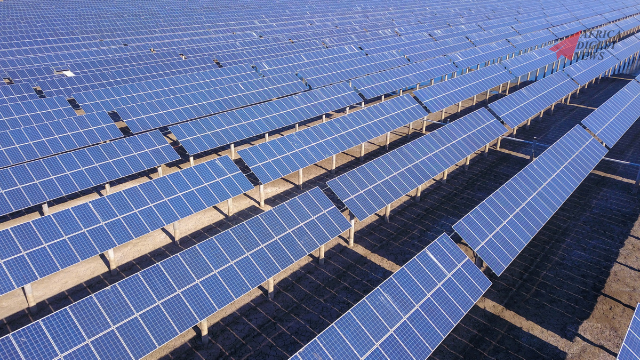
- A 75 MW solar power plant at Lethabo Power Station in the Free State.
These projects illustrate Eskom’s broader strategy: repurpose existing power stations and transmission infrastructure instead of building entirely new energy corridors.
Why China Is Central to the Transition
China’s importance lies less in financing alone and more in its position as the world’s manufacturing powerhouse for clean energy. Chinese companies dominate global production of:
- Solar photovoltaic modules
- Wind turbines
- Battery energy storage systems
- Power electronics and grid equipment
As South Africa accelerates renewable deployment, access to competitively priced equipment has become just as important as access to capital. Chinese firms are already supplying technology for several South African renewable projects while expanding partnerships in manufacturing, engineering and project delivery.
The relationship extends beyond importing solar panels. Recent government engagements between South Africa and China have focused on:
- Renewable energy investment
- Grid modernization
- Energy storage technologies
- Skills development
- Local manufacturing opportunities
- Support for South Africa’s Just Energy Transition
The objective is to build renewable capacity faster while strengthening domestic industrial capabilities. One of Eskom Green’s priorities is supplying renewable electricity to energy-intensive industries.
These include:
- Mining companies
- Smelters
- Manufacturing facilities
- Large industrial customers seeking to reduce carbon emissions
Many of these businesses want renewable power without disconnecting from the national grid. Utility-scale solar, storage and future wheeling arrangements are expected to play an increasingly important role in meeting that demand.
South Africa faces three challenges simultaneously:
- Replacing aging coal capacity.
- Ending chronic electricity shortages.
- Lowering carbon emissions.
Meeting all three requires massive investment in renewable energy, storage and transmission infrastructure. By combining Eskom’s market presence with Chinese technology and industrial capacity, South Africa hopes to shorten project timelines, reduce equipment costs and accelerate deployment.
Read Also: South Africa Strengthens Energy Ties with China to Accelerate Eskom Green’s Renewable Push
The launch of Eskom Green represents one of the utility’s biggest strategic shifts in decades. Instead of being viewed solely as a coal-based electricity producer, Eskom is positioning itself as a developer of renewable energy assets that can compete alongside private producers while supporting the national grid.
South Africa’s energy transition is no longer only about replacing coal with solar or wind. It is becoming an industrial strategy built on new partnerships, modern grid infrastructure and utility-scale renewable investment. The strengthening relationship with China and the creation of Eskom Green suggest that the next phase of South Africa’s power sector will be defined not just by cleaner electricity, but by who builds it, how quickly it is deployed and how competitively it can be delivered.