Traditional power grids operate on a one-way model: centralized power plants generate electricity, which flows through transmission and distribution networks to consumers. This model worked for a century, but it cannot accommodate the complexity of modern energy systems with distributed solar, wind, and storage resources.
Smart grids, powered by artificial intelligence, are fundamentally transforming how electricity is generated, distributed, and consumed.
A smart grid is a digitally enhanced electrical network that uses real-time data and automated controls to balance supply and demand dynamically. Unlike conventional grids that rely on static forecasts and manual adjustments, smart grids use sensors, meters, and communication networks to monitor conditions continuously and respond in milliseconds. This capability is essential for integrating renewable energy, which is intermittent and unpredictable.
Artificial intelligence amplifies smart grid capabilities by enabling predictive analytics and autonomous decision-making. AI algorithms analyze historical weather data, consumption patterns, and grid conditions to forecast renewable generation and demand hours in advance.
This foresight allows grid operators to optimize energy flows, pre-position storage resources, and prevent blackouts before they occur. Argonne National Laboratory’s GridMind system exemplifies this approach, using AI agents to reason through complex grid scenarios and recommend optimal control strategies.
The economic impact is substantial. The global smart grid market was valued at $73 billion in 2025 and is growing at 10.5% annually, with projected investment of $700 billion in digital grid technologies between 2026 and 2035.
This investment reflects the urgency of grid modernization. Utilities face unprecedented challenges: aging infrastructure, rising electricity demand from electrification, and the need to integrate renewable energy at scale. Smart grids address all three challenges simultaneously.
For renewable energy integration specifically, smart grids enable higher penetration of variable resources. In regions with 50-70% renewable penetration, conventional grids become unstable and require expensive backup capacity.
Read Also: Beyond Lithium: The Next Generation of Energy Storage Technologies
Smart grids, coupled with AI forecasting and storage optimization, can reliably manage 80%+ renewable penetration. This capability is transforming energy planning in regions like Denmark, California, and increasingly, parts of Africa and Asia.
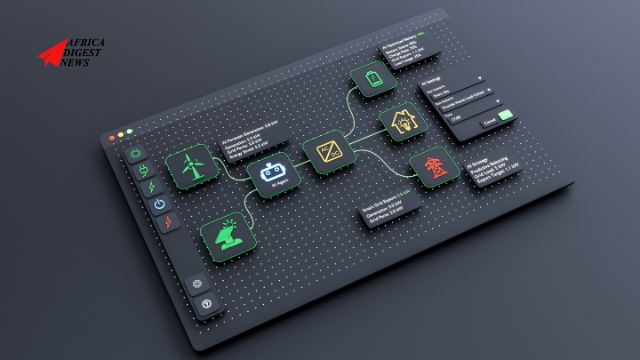
The practical implementation involves three layers: sensors and communication networks that collect real-time data, AI algorithms that analyze data and make decisions, and automated controls that execute those decisions. A modern smart grid might include millions of sensors monitoring voltage, frequency, and power flows at distribution points, coupled with machine learning models that predict optimal switching sequences for thousands of circuit breakers and power electronics.
For energy planners and utilities, the transition to smart grids is not optional; it is a prerequisite for a renewable energy future. The good news is that smart grid technologies are becoming increasingly affordable and accessible.
Open-source software platforms, standardized communication protocols, and cloud-based AI services are democratizing smart grid deployment, enabling even small utilities and microgrids to benefit from these capabilities.
By Thuita Gatero, Managing Editor, Africa Digest News. He specializes in conversations around data centers, AI, cloud infrastructure, and energy.