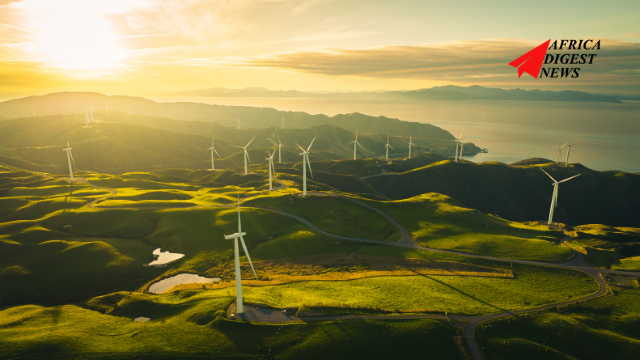
In March 2024, the African Development Bank approved new funding through the Sustainable Energy Fund for Africa to support renewable energy projects across fragile states.
The announcement was one of dozens made across the continent that year. New funds were launched. Existing facilities were expanded. Development finance institutions committed billions more toward climate and energy projects. Yet for many developers, securing capital remained just as difficult as it was five years ago.
That contradiction sits at the centre of Africa’s energy transition. Money is being announced. Projects are being announced. Targets are being announced. Yet thousands of megawatts remain stuck between concept and construction.
The reason is simple. Investors do not finance energy shortages. They finance projects. Those are not the same thing. A country may need 5,000 megawatts of additional generation capacity. A community may need electricity. A utility may need more power on the grid.
None of those needs automatically attract capital. Before money moves, investors need answers. Who will buy the electricity? At what price? For how long? Who carries currency risk? What happens if the utility delays payment? What happens if government policy changes? Can profits leave the country?
These questions determine whether a project receives funding long before anyone discusses solar panels, wind turbines or battery systems. Understanding renewable energy funding in Africa starts here.
Why Renewable Energy Funding Matters More Than Ever
Africa’s population is expected to continue growing through the coming decades. Electricity demand is growing alongside it. At the same time, governments are under pressure to expand access, support industrialisation and reduce dependence on imported fuels.
Renewable energy sits at the intersection of all three objectives. Solar plants can be built faster than many conventional power projects. Mini-grids can electrify communities that national grids may not reach for years. Battery storage is beginning to solve reliability challenges that previously limited renewable deployment.
The technology is no longer the question. Financing is. According to the International Energy Agency, hundreds of millions of Africans still lack access to electricity despite significant progress in renewable energy deployment. Investment levels remain far below what is required to meet the continent’s energy needs.
This financing gap has created one of the largest investment opportunities in the global energy market. The challenge is turning opportunity into bankable projects.
Who Provides Renewable Energy Funding in Africa?
The image many people have is simple. A developer prepares a proposal. An investor writes a cheque. Construction begins.
Reality is far more complicated.
Most utility-scale projects rely on multiple funding sources operating together. Development finance institutions often provide early support. Commercial lenders provide debt. Infrastructure funds provide equity. Governments provide policy support. Grant facilities absorb part of the development risk.
Each participant enters the project for a different reason. Each participant leaves if risk exceeds acceptable levels. Understanding these relationships is often more important than understanding the technology itself.
The Institutions Moving the Most Capital
The African Development Bank remains one of the most influential players through facilities such as the Sustainable Energy Fund for Africa. The International Finance Corporation continues to back renewable energy projects across multiple African markets.
The Green Climate Fund, Climate Investment Funds, European development institutions and private infrastructure funds have also expanded their activity in recent years.
Together, these organisations influence where capital flows and which projects move forward. For developers, understanding their investment criteria is part of project development.
What Investors Look For
Many developers believe funding follows good ideas. Investors believe funding follows predictable cash flow. That difference explains why some projects attract capital quickly while others struggle for years.
Investors want evidence. Land rights. Grid access. Power purchase agreements. Permits. Demand forecasts. Financial models. A project may solve a real energy problem. That alone is not enough. The project must also produce returns that justify the risks involved.
This is why two projects with similar technology can receive completely different investor responses. The technology may be identical. The risk profile is not.
Why Some African Markets Attract More Capital Than Others
Kenya. South Africa. Morocco. Egypt. These countries continue attracting a disproportionate share of renewable energy investment. Many neighbouring countries possess similar renewable resources.
The difference is predictability. Investors can assess projects more easily when regulations are clear, procurement frameworks are established and utilities maintain stronger payment records. Capital rarely rewards uncertainty. It prices it. And sometimes it avoids it entirely.
The Question Every Developer Should Ask
Most project discussions begin with:
How much money do we need?
The better question is:
Why would an investor fund this instead of something else?
That question forces developers to see their projects through the eyes of capital. A renewable energy project in Africa is not competing against another renewable energy project. It is competing against infrastructure opportunities across the world.
Read Also: Angola’s Solar Expansion Is About More Than Electricity
Every investment committee has alternatives. Projects that understand this reality raise capital faster. Projects that ignore it often remain proposals.
Africa’s renewable energy story is often told through megawatts, climate targets and investment announcements. Those metrics matter. But they sit downstream of a more important decision.
Whether capital moves. Every solar farm, wind project, mini-grid and battery installation begins with someone deciding that the risks are acceptable and the returns justify the commitment. Understanding how that decision is made is the first step toward understanding renewable energy funding in Africa.
By Thuita Gatero, Managing Editor, Africa Digest News.


