Key Takeaways
- Nesa Power has secured mezzanine financing from the ThirdWay Africa Climate and Development Fund to support the expansion of commercial solar projects in South Africa.
- The funding will help bridge the gap between senior debt and equity, accelerating renewable energy project development.
- Demand for commercial solar continues to grow as businesses seek lower electricity costs, improved energy security, and reduced carbon emissions.
- Mezzanine financing is becoming an important source of capital for renewable energy developers across Africa.
- The investment highlights the increasing role of climate finance in supporting private-sector clean energy infrastructure and South Africa’s transition to a more resilient electricity system.
South African renewable energy developer Nesa Power has secured mezzanine financing from the ThirdWay Africa Climate and Development Fund, providing fresh capital to accelerate the rollout of commercial and industrial (C&I) solar projects across the country.
The investment is expected to help the company bridge funding gaps between senior debt and equity, enabling faster deployment of distributed renewable energy systems for businesses seeking reliable and affordable electricity.
The financing comes as South Africa continues to experience strong demand for private renewable energy solutions, driven by rising electricity costs, ongoing grid constraints, and growing corporate commitments to reduce carbon emissions. Businesses are increasingly investing in on-site solar generation to improve energy security and lower operating expenses.
Addressing the Financing Gap
Renewable energy projects often require multiple layers of financing.
While banks typically provide senior debt and project developers contribute equity, many projects still face a funding shortfall. Mezzanine financing fills this gap by providing flexible capital that sits between traditional debt and equity.
This additional funding enables developers to:
- Launch projects more quickly.
- Reduce the amount of equity required from investors.
- Scale multiple projects simultaneously.
- Improve overall financial flexibility.
For growing renewable energy companies such as Nesa Power, mezzanine financing can be a critical tool for expanding operations without significantly diluting ownership.
What Is Mezzanine Financing?
Mezzanine financing is a hybrid form of funding that combines elements of debt and equity.
Unlike conventional bank loans, it generally offers greater flexibility in repayment while carrying higher risk for investors. In return, investors typically receive higher potential returns or options to convert part of the financing into equity under agreed conditions.
A simplified capital structure looks like this:
| Capital Source | Risk Level | Typical Return |
| Senior Debt | Lowest | Lower |
| Mezzanine Financing | Medium | Moderate to High |
| Equity | Highest | Highest |
For renewable energy developers, this financing structure is particularly useful when projects have strong commercial potential but require additional capital before construction can begin.
Supporting South Africa’s Commercial Solar Market
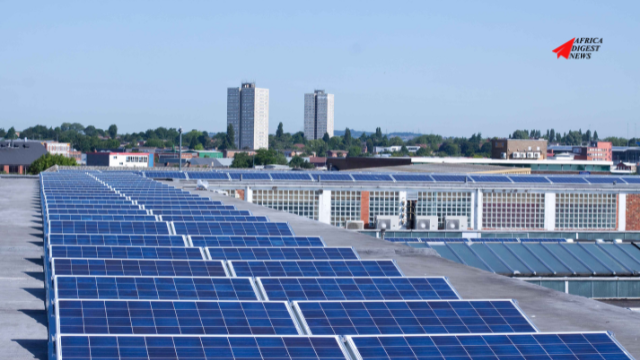
Nesa Power focuses on the commercial and industrial (C&I) renewable energy sector, helping businesses install solar systems that reduce dependence on the national electricity grid.
Unlike large utility-scale power plants that feed electricity into the national network, C&I projects are typically installed directly at commercial facilities such as:
- Manufacturing plants.
- Warehouses.
- Shopping centres.
- Office parks.
- Agricultural operations.
- Logistics facilities.
These systems allow businesses to generate electricity where it is consumed, reducing exposure to grid disruptions and rising electricity tariffs.
Why Demand for Private Solar Is Growing
South Africa has experienced a rapid increase in private renewable energy investment over the past several years.
Several factors are driving this trend:
- Rising electricity prices.
- The need for greater energy reliability.
- Improvements in solar panel efficiency.
- Falling battery storage costs.
- Corporate sustainability targets.
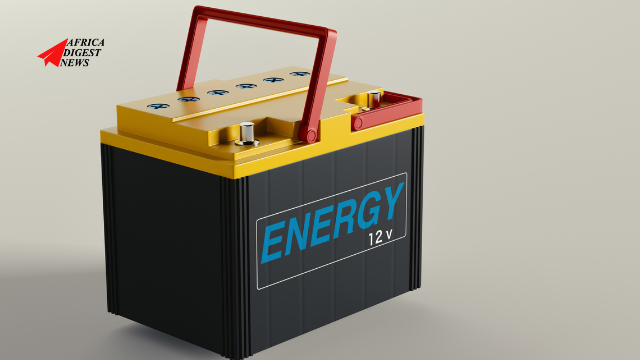
Many companies are also integrating battery storage with rooftop or ground-mounted solar installations, allowing them to store excess electricity for use during periods of high demand or grid interruptions.
As a result, commercial solar has become an increasingly attractive long-term investment for businesses seeking predictable energy costs.
The Role of Climate Finance
The ThirdWay Africa Climate and Development Fund was established to support businesses developing solutions that contribute to climate resilience and sustainable economic growth across Africa.
By investing in renewable energy companies such as Nesa Power, climate-focused investment funds help mobilize private capital for projects that may otherwise struggle to obtain sufficient financing.
This approach enables:
- Faster deployment of renewable infrastructure.
- Greater private-sector participation.
- Reduced greenhouse gas emissions.
- Expanded access to clean energy technologies.
Climate finance is becoming an increasingly important source of funding as African countries work to accelerate the transition toward low-carbon energy systems.
A Growing Opportunity for Distributed Energy
Rather than relying solely on large centralized power stations, many countries are increasingly investing in distributed energy systems—smaller power generation projects located close to where electricity is used.
Commercial solar installations offer several advantages:
| Benefit | Impact |
| Lower electricity costs | Reduces operating expenses |
| Greater energy independence | Less reliance on the national grid |
| Faster deployment | Projects can often be completed within months |
| Lower emissions | Supports corporate sustainability goals |
| Improved resilience | Reduces the impact of grid outages |
This trend is expected to continue as businesses seek more reliable and cost-effective energy solutions.
The Bigger Picture
South Africa remains one of Africa’s largest renewable energy markets, with growing investment across utility-scale generation, battery storage, and distributed solar systems.
While government-led renewable energy programmes continue to expand national generation capacity, private-sector investment is playing an increasingly important role in meeting electricity demand.
Funding structures such as mezzanine financing are helping unlock projects that might otherwise be delayed, allowing developers to scale renewable energy deployment more rapidly and support the country’s broader energy transition.