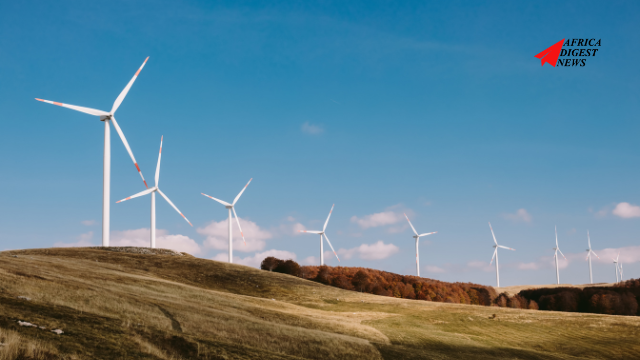
As of 2026, the global count of operational wind turbines has reached unprecedented numbers, reflecting massive investments and technological advancements in the wind power sector.
This global census provides a snapshot of the sheer scale of wind energy deployment and its pivotal role in decarbonizing our planet. While an exact, real-time count of every single wind turbine is challenging due to continuous installations and decommissioning, we can derive a robust estimate based on installed capacity.
The Global Wind Energy Council (GWEC) reported that global wind capacity reached an impressive 1,299 Gigawatts (GW) by the end of 2025, following a record-breaking 165 GW of new installations that year.
To translate this capacity into a turbine count, we need to consider the average capacity of a modern wind turbine.
Estimating the Global Turbine Count
The average capacity of newly installed onshore wind turbines in 2025 was approximately 3.5 to 4.5 Megawatts (MW), while offshore turbines, being significantly larger, averaged 8 to 12 MW, with some reaching 15 MW or more.
For a conservative estimate, let’s consider an average turbine capacity of 4 MW across both onshore and offshore installations, acknowledging that this is a simplification given the wide range of turbine sizes. Using this average, the total number of wind turbines globally can be estimated as follows:
Total Turbines = Total Installed Capacity (GW) / Average Turbine Capacity (GW)
Total Turbines = 1,299 GW / 0.004 GW/turbine ≈ 324,750 turbines
This estimate suggests that there are well over 300,000 operational wind turbines scattered across the globe in 2026. This number is constantly growing, with thousands more being installed annually. It underscores the immense physical infrastructure dedicated to harnessing wind power.
Distribution by Country and Region
The distribution of these turbines is far from uniform. China, as the undisputed global leader in wind power, hosts the largest share of the world’s wind turbines. With 640.5 GW of installed capacity by the end of 2025, China alone accounts for nearly half of the global total. This translates to roughly 160,000 turbines within its borders, a staggering figure that highlights its commitment to renewable energy.
Following China, the United States (161.2 GW) and Germany (77.7 GW) are significant contributors to the global turbine fleet.
Europe as a continent has surpassed 300 GW of installed capacity, indicating tens of thousands of turbines across its member states. Countries like India, Brazil, and Spain also boast substantial numbers of turbines, reflecting their national wind energy strategies.
Onshore vs. Offshore Turbines
The vast majority of the world’s wind turbines are located onshore. Onshore wind power accounted for 155.3 GW of new installations in 2025, compared to 9.3 GW for offshore wind. While offshore turbines are fewer in number, their individual capacity is much higher, and they are typically located in clusters far from shore.
Read Also: The Top 10 Wind Energy Producing Countries in 2026 (And Who’s Catching Up)
The global offshore wind capacity is approaching the 100 GW milestone, meaning there are likely several thousand large-scale offshore turbines in operation, concentrated in regions like Europe and Asia.
The Impact of Turbine Technology
The average size of wind turbines has dramatically increased over the past decade. Larger turbines, especially in offshore environments, are more efficient, capture more wind energy, and have higher capacity factors.
This means that fewer turbines are needed to generate the same amount of electricity compared to older, smaller models. The trend towards larger, more powerful turbines is expected to continue, optimizing land use and maximizing energy output.
The 2026 global census of wind turbines reveals a thriving and expanding industry. With over 300,000 turbines actively generating clean electricity, wind power is a cornerstone of the global energy transition.
This vast network of machines represents a collective commitment to combating climate change, enhancing energy security, and building a sustainable future. As technology advances and global demand for clean energy grows, the number and efficiency of wind turbines will only continue to rise, further solidifying their role as essential components of the world’s energy infrastructure.
By Thuita Gatero, Managing Editor, Africa Digest News. He specializes in conversations around data centers, AI, cloud infrastructure, and energy.


