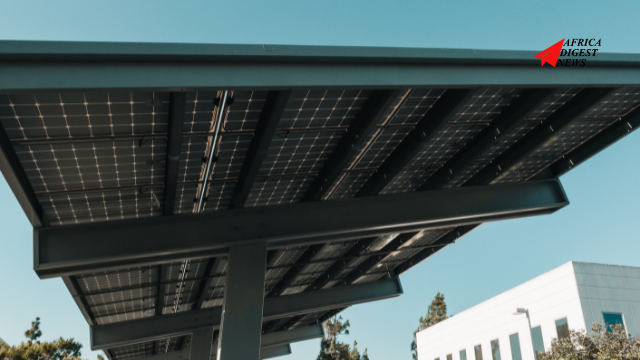
The Central African Republic has commissioned the Sakaï solar power plant, the largest power-generation project in the country’s history, in a major expansion of its electricity infrastructure. Located about 10 kilometres southwest of Bangui, the facility combines 50 MW of solar photovoltaic capacity with a 15 MWh battery energy storage system, adding a substantial block of renewable generation to a national grid that has historically depended heavily on diesel generation.
The project was developed, financed and constructed by UAE-based Global South Utilities (GSU) in about 10 months, with commissioning taking place in August 2026. The plant uses more than 80,000 solar panels and is being brought into service in phases. Around 15 MW of its output is initially being directed to Bangui’s 3rd and 9th districts, with the government planning to extend supply to other parts of the capital as the transmission and distribution network is strengthened.
The scale of the project is particularly significant for CAR. The government and GSU say Sakaï increases the country’s total generation capacity by more than 60%, making it roughly twice the size of the previous major solar installation, the 25 MW Danzi solar plant commissioned in 2023. The addition therefore represents more than simply another renewable project—it materially changes the size of the country’s power system.
Read Also: Egypt Opens 500 MW Solar Tender Under Build-Own-Operate Model
Sakaï is also intended to reduce the country’s reliance on expensive diesel generation. Once fully integrated, the project is expected to provide clean electricity to more than 300,000 households and avoid over 50,000 tonnes of CO₂ emissions annually by displacing diesel-based generation. The inclusion of battery storage is important because it allows solar power to be managed more flexibly and can help smooth the variable output of the solar plant as it is integrated into CAR’s relatively small grid.
The project nevertheless illustrates a broader challenge facing African power systems: building generation is only half the problem. Sakaï can produce 50 MW, but delivering that electricity to more households requires sufficient transmission and distribution infrastructure to absorb and distribute the additional power. The phased rollout therefore reflects the reality of CAR’s grid constraints. If those networks are expanded alongside generation, Sakaï could become a significant step in moving Bangui and the wider country away from diesel dependence and towards a more reliable and cleaner electricity system.