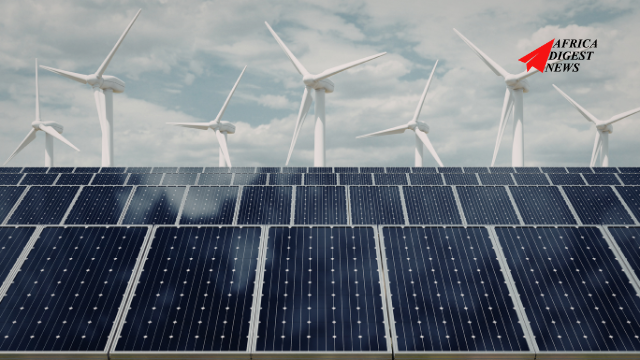
Africa stands at a critical juncture in its energy transition, facing an urgent need for substantial investment to bridge a colossal electricity access gap and meet ambitious climate objectives.
The continent requires an estimated $133 billion annually in clean energy funding by 2030 to electrify its communities and industrialize sustainably. Yet, a discernible trend of receding development finance from traditional Western sources—the United States, Europe, and even China is creating a significant void.
This retreat is not merely a financial statistic; it is a geopolitical inflection point, compelling Africa to forge new alliances and re-evaluate its partnerships in the global energy landscape.
For decades, Western nations have been primary financiers of development projects across Africa, often through sovereign loans and aid packages. However, as global economic priorities shift and internal pressures mount, the flow of this capital has become increasingly constrained.
This retrenchment leaves a vacuum that new players are eager to fill, most notably the burgeoning economies of the Middle East. The proactive engagement of Gulf states, led by the UAE and Saudi Arabia, is a direct response to this funding deficit, positioning them as indispensable partners in Africa’s clean energy future.
The implications of this shift are profound. Africa, home to over 600 million people without reliable electricity, accounts for a mere 2% of global clean energy investment, a stark imbalance that underscores the urgency of securing diverse and robust funding sources.
The traditional model of debt-heavy lending, while providing necessary capital, has often left African nations grappling with unsustainable debt burdens. The emerging model championed by Gulf investors, which prioritizes direct project funding and market creation over sovereign loans, offers a potentially more sustainable pathway to development.
This approach not only reduces pressure on public debt but also facilitates larger and faster-moving infrastructure projects, critical for accelerating Africa’s energy transition.
The high stakes involved in this funding realignment cannot be overstated. Africa’s ability to industrialize, create jobs, and lift millions out of poverty is directly tied to its capacity to generate and distribute clean, affordable energy.
Read Also: Africa’s Grid Revolution: Battery Storage Emerges as Essential Infrastructure
The retreat of traditional financiers risks slowing this progress, exacerbating existing inequalities, and potentially undermining global climate targets. Therefore, the embrace of new financial alliances is not a matter of preference but of necessity, driven by the imperative to secure the capital required for a just and equitable energy transition.
This evolving financial landscape challenges African nations to strategically engage with these new power brokers, ensuring that investments align with national development priorities and contribute to long-term, system-wide impact.
The dialogue must move beyond simply accepting capital to actively shaping the terms of engagement, demanding transparency, sustainability, and a commitment to broad-based development.
The current moment represents a critical opportunity for Africa to assert greater agency in its development trajectory, leveraging the shifting global financial currents to build a resilient, electrified future on its own terms.
By Thuita Gatero, Managing Editor, Africa Digest News. He specializes in conversations around data centers, AI, cloud infrastructure, and energy.