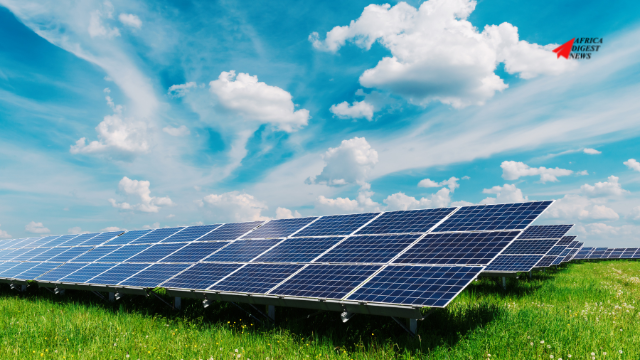
A $50 million green bond issued by African Frontier Capital (AFC) may appear modest compared to the multi-billion-dollar infrastructure projects often dominating energy headlines.
However, industry observers argue that the transaction could represent something far more significant: a blueprint for how private capital can help close Africa’s persistent energy access gap.
The bond, structured with support from Standard Chartered and backed by a financial guarantee from the Green Guarantee Company (GGC), will finance the rollout of solar home systems through d.light across underserved communities in Sub-Saharan Africa. The initiative is expected to improve access to clean electricity for approximately 4.3 million people.
The transaction highlights a growing shift in African renewable energy financing—from dependence on development finance institutions toward greater participation by institutional investors and capital markets.
The Deal at a Glance
| Metric | Details |
| Financing Instrument | Green Bond |
| Value | $50 Million |
| Issuer | African Frontier Capital |
| Beneficiary | d.light |
| Expected Beneficiaries | 4.3 Million People |
| Bond Rating | BBB (Fitch) |
| Maturity | 4 Years |
| Listing Venue | London Stock Exchange International Securities Market |
The bond attracted participation from UK and US institutional investors, demonstrating increasing global appetite for climate-focused investments in emerging markets.
Why Energy Access Remains One of Africa’s Biggest Economic Challenges
Despite rapid economic growth across many African countries, access to reliable electricity remains uneven. Millions of households continue to rely on kerosene lamps, diesel generators and other expensive alternatives that limit economic productivity and educational opportunities.
Distributed solar systems are increasingly viewed as one of the fastest ways to address this challenge because they can be deployed without waiting for costly grid infrastructure.
Economic Effects of Energy Access
| Sector | Potential Benefit |
| Education | Extended study hours |
| Healthcare | Reliable power for clinics |
| Small Business | Longer operating hours |
| Agriculture | Improved processing and storage |
| Digital Services | Greater internet connectivity |
| Households | Reduced energy costs |
The importance of off-grid solar has grown significantly over the past decade, particularly in rural regions where extending national grids remains financially challenging.
Why Investors Are Paying Attention
Historically, many renewable energy projects in Africa depended heavily on development banks and donor funding. The AFC transaction demonstrates a different model. Instead of relying solely on concessional financing, the structure combines private institutional capital, guarantees, sustainability frameworks and capital-market instruments.
What Makes This Financing Model Different?
| Traditional Model | Emerging Model |
| Development Bank Loans | Institutional Capital |
| Government Guarantees | Credit Enhancement |
| Limited Investor Base | Global Investors |
| Public Sector Driven | Market Driven |
| Project-by-Project Financing | Scalable Capital Markets |
Industry experts increasingly believe that Africa’s energy transition will require much larger pools of private capital than governments or development institutions can provide alone.
The Rise of Distributed Solar Finance
The transaction also highlights the growing maturity of Africa’s off-grid solar sector. Companies such as d.light have spent years developing pay-as-you-go financing models that allow low-income households to access solar systems through affordable instalments.
Since its founding, d.light has impacted more than 150 million people through solar products ranging from lanterns and home systems to televisions and smartphones powered by renewable energy. The company has also secured multiple large-scale financing facilities in recent years, including a $176 million securitisation facility aimed at expanding access to solar products across East Africa.
Evolution of Solar Financing in Africa
| Period | Financing Trend |
| 2010–2015 | Donor & NGO Funding |
| 2015–2020 | Development Finance Institutions |
| 2020–2025 | Securitisation Structures |
| 2025–2030 | Green Bonds & Capital Markets |
This evolution suggests that renewable energy financing in Africa is gradually becoming a mainstream investment category rather than a niche impact-investment sector.
Why This Matters for Africa’s Energy Future
According to multiple energy analysts, Africa’s energy transition will require hundreds of billions of dollars in investment over the coming decades.
Governments alone cannot provide this capital. Nor can development banks. The continent’s renewable energy ambitions will increasingly depend on attracting pension funds, insurance companies, institutional investors and private asset managers into the sector.
The AFC green bond demonstrates that such participation is possible when projects are structured to meet investor expectations around risk, transparency and returns.
The critical question is whether sufficient capital can be mobilised quickly enough to deploy solutions at scale. If transactions like the AFC green bond become more common, they could unlock a new era in which renewable energy expansion is funded not only by governments and development agencies but also by mainstream global capital markets.
That shift could prove to be one of the most important developments in Africa’s energy transition over the next decade.


