Africa’s energy sector is entering a period of rapid transformation. As the continent’s population approaches 2.4 billion by 2050 and GDP is projected to triple to $7.8 trillion, electricity demand is expected to rise sharply. Meeting this demand while reducing carbon emissions has placed renewable energy at the center of Africa’s economic and industrial planning.
Between 2020 and 2025, the continent invested roughly $34 billion in clean energy projects. Solar power received more than half of this investment, with wind energy capturing a further 25 percent. Governments have procured around 25 gigawatts (GW) of renewable capacity, while the private sector has secured an additional 11 GW through independent agreements. Companies are increasingly investing in renewables to secure reliable electricity, manage costs, and hedge against grid instability.
Read Also: South Africa Leads Africa’s Renewable Energy Investment Pipeline, Forvis Mazars Report Finds
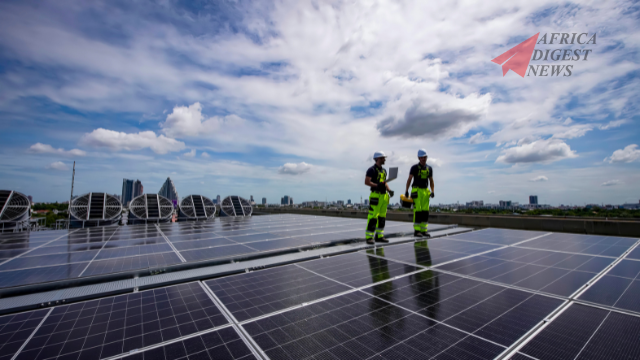
Solar energy dominates Africa’s renewable growth story. The continent receives between 2,000 and 3,000 kWh per square meter annually, yet the majority of this resource remains untapped. South Africa, Morocco, and Egypt are leading deployment through supportive policies and incentives.
Off-grid and pay-as-you-go systems are expanding access in remote areas. In 2023 alone, off-grid solar projects in Africa attracted approximately $425 million in private financing, demonstrating growing investor confidence.
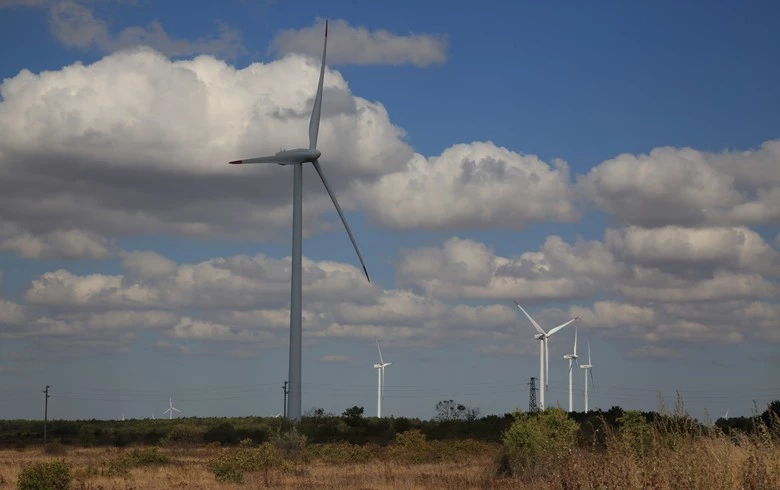
Wind energy also offers untapped potential. Africa has an estimated 1,300 GW of high-wind capacity, particularly in North, East, and Southern Africa. Currently, wind and solar together make up only 9 percent of installed capacity.
By 2050, this share is expected to rise to 41 percent as costs continue to fall. In countries like Nigeria, Egypt, and South Africa, solar and wind are now cheaper than coal and gas, making renewables increasingly competitive.
Challenges remain. Solar and wind output is intermittent, requiring investment in battery storage or complementary baseload power. Storage costs remain high, ranging from $150 to $300 per megawatt-hour. Achieving universal electricity access by 2030 will require an estimated $30 billion annually, compared with current investments of $3.7 billion per year.
The continent contributes only 5 percent of global energy-related emissions while hosting nearly 20 percent of the world’s population. Expanding solar, wind, and hydrogen capacity, coupled with regional grid integration and regulatory reform, positions Africa as one of the fastest-growing renewable energy markets in the world.
By 2026, investment trends suggest the continent will not only address its own electricity needs but also emerge as a key player in the global low-carbon economy.
By Thuita Gatero, Managing Editor, Africa Digest News. He specializes in conversations around data centers, AI, cloud infrastructure, and energy.