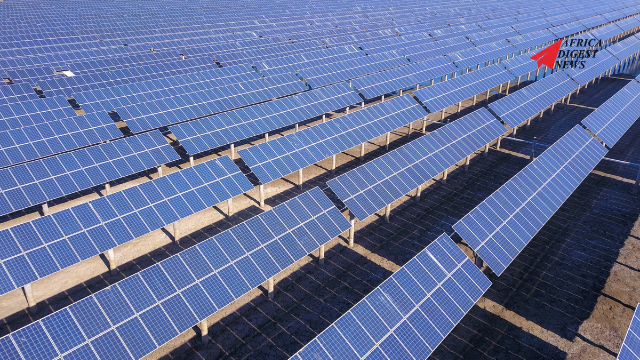
The Private Infrastructure Development Group (PIDG) plans to invest approximately $1 billion annually across Africa and Asia through 2030, with renewable energy expected to account for most of the funding as development financiers face growing pressure to sustain infrastructure investment.
Chief Executive Philippe Valahu outlined the investment outlook in comments to Bloomberg, according to a report published by Semafor on 26 October 2026. PIDG operates across 24 sub-Saharan African countries, including Kenya, Ethiopia, Angola and South Africa.
The investment target comes as several governments supporting the group reduce aid spending, raising questions about how PIDG will maintain its financing capacity over the coming years.
PIDG’s $1 Billion Annual Investment Target
PIDG’s planned annual investment of approximately $1 billion builds on its 2025 financing activity, when the organisation committed $1 billion to 33 infrastructure projects.
Those projects attracted $4.1 billion in total investment, including $2.9 billion mobilised from the private sector, according to PIDG’s 2025 Sustainability and Impact Report.
The figures illustrate the role development financiers can play in bringing additional capital into infrastructure markets where perceived risk, high upfront costs and lengthy project development periods can deter commercial investors.
PIDG works across the infrastructure project lifecycle, providing technical assistance, project development funding, equity, debt and credit solutions. These instruments can help projects overcome financial and technical barriers before attracting additional investment.
The distinction matters because the $1 billion annual target is not equivalent to the total value of infrastructure that could be financed. PIDG’s approach is designed to use its capital and risk-sharing mechanisms to support a broader pool of investment.
Renewable Energy Remains a Major Investment Priority
Renewable energy is expected to receive the largest share of PIDG’s planned investment through 2030. The organisation’s broader infrastructure activities also cover transport, telecommunications and other essential services across emerging markets.
For African energy markets, additional financing could support projects that struggle to secure funding on commercial terms, including renewable energy generation and infrastructure needed to improve electricity access.
The availability of capital, however, does not guarantee that projects will proceed. Developers must still address feasibility, permitting, power purchase arrangements, grid connections and other requirements needed to bring projects to financial close.
PIDG’s project-development and financing model seeks to address some of these barriers, helping infrastructure projects progress towards investment readiness and attracting other sources of capital.
How PIDG Uses Development Finance to Attract Private Capital
PIDG uses a combination of development funding and commercial financing instruments to reduce risks that can prevent private investors from backing infrastructure projects.
Its approach includes early-stage project development, technical assistance, debt financing and guarantees. Depending on the project, these instruments can address barriers involving project preparation, financing terms and credit risk.
The strategy is particularly relevant in markets where infrastructure demand is substantial but investors face uncertainty around regulation, currency exposure, project viability or the ability of customers to pay for services.
PIDG’s 2025 results provide an indication of the scale of this financing model. The organisation committed $1 billion to projects that attracted $4.1 billion in total investment, with $2.9 billion coming from private-sector mobilisation.
The challenge through 2030 will be sustaining this investment activity while ensuring that projects reach completion and deliver the expected infrastructure and development outcomes.
Funding Pressures Raise Questions About PIDG’s Investment Capacity
PIDG’s investment plans come amid reductions in aid spending by several of its government funders, according to Semafor. The group is backed by the governments of the United Kingdom, the Netherlands, Switzerland, Australia and Sweden.
Changes in donor funding can complicate the outlook for development finance institutions that use public resources to support projects and mobilise commercial capital.
For PIDG, maintaining investment levels will depend on its available resources, fundraising capacity, partnerships and ability to attract additional investors into its projects.
The issue extends beyond one financing organisation. Renewable energy and infrastructure projects in emerging markets often require long-term capital, while some projects carry risks that commercial lenders and investors may be unwilling to assume without additional support.
PIDG’s investment target therefore raises a broader question about how development finance can continue supporting infrastructure expansion as traditional sources of development funding face constraints.
What PIDG’s Investment Plans Mean for Africa
PIDG’s presence across sub-Saharan Africa positions it to support infrastructure projects in markets including Kenya, Ethiopia, Angola and South Africa. Its financing activities could contribute to renewable energy development and other infrastructure needs, depending on where projects meet its investment criteria.
For project developers, the availability of development finance can help address early-stage funding gaps and improve the prospects of attracting additional investment. For governments, it can provide another source of financing for infrastructure priorities that might otherwise struggle to secure sufficient capital.
Read Also: Nigeria’s 14GW Power Capacity Milestone Masks a Much Smaller Supply
However, the regional investment target should not be interpreted as a commitment to allocate $1 billion annually to Africa alone. PIDG’s plans cover both Africa and Asia, and the distribution of future investment will depend on its project pipeline and financing decisions.
The longer-term measure of success will be whether the planned capital translates into completed infrastructure, improved access to essential services and projects capable of attracting sustained investment.
PIDG’s target through 2030 places the focus on both the amount of capital it can deploy and its ability to mobilise additional financing. In renewable energy markets where funding remains a critical constraint, that distinction will be central to assessing the group’s contribution.