Solar power is usually associated with cheap electricity, but that comparison changes when the sun goes down. During the day, solar photovoltaic (PV) panels can produce electricity at extremely low cost. The problem begins in the evening, when South Africa’s electricity demand remains high but solar production falls to zero. At that point, the country has to add storage or other dispatchable generation. A new argument from SolarPACES suggests that this is where concentrated solar power (CSP) with molten-salt thermal storage could have a major advantage: in its illustrative comparison, daytime PV costs about US$35/MWh, but supplying a full night with PV plus lithium-ion batteries pushes the cost to roughly US$166/MWh, compared with about US$95/MWh for CSP with thermal storage.
The reason is that CSP and PV solve different problems. PV converts sunlight directly into electricity, making it exceptionally cheap when the sun is available. CSP instead uses mirrors to concentrate sunlight and create heat. That heat can be stored in large tanks of molten salt during the day. After sunset, the stored heat is used to produce steam and run a turbine, allowing the plant to continue generating electricity when there is no sunlight. Modern CSP plants can therefore be designed with 12 to 20 hours of thermal storage, turning intermittent solar energy into something much closer to a dispatchable power plant.
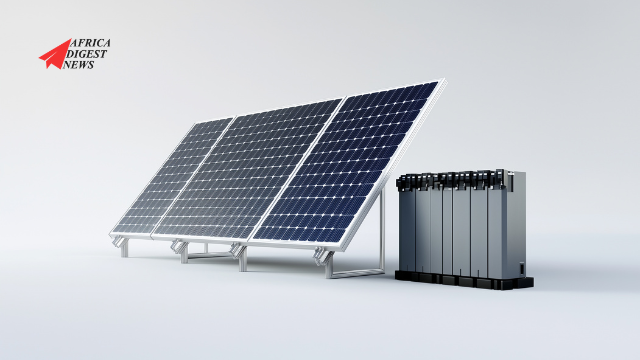
This changes the economics of storage. Lithium-ion batteries are highly effective for shorter-duration applications such as frequency regulation, peak shaving and storing a few hours of solar electricity. But providing enough battery capacity to cover an entire evening and night means installing a very large amount of storage that sits idle for much of the day. Thermal storage works differently. Once the CSP plant has built the storage tanks and filled them with molten salt, adding more hours of storage can be relatively inexpensive compared with adding equivalent battery capacity. SolarPACES therefore argues that the relevant comparison is not cheap PV versus expensive CSP, but PV-plus-enough-storage versus CSP-plus-enough-storage to deliver the same electricity when the grid needs it.
South Africa is particularly interesting because its electricity system is becoming increasingly dependent on variable renewable generation. More wind and PV can reduce fuel consumption and daytime generation costs, but they also increase the importance of having electricity available when renewable output falls. South Africa already has experience with CSP and thermal storage through plants such as Kathu, KaXu, Bokpoort and Redstone, demonstrating that the technology is not merely theoretical. In a grid where evening demand remains significant, CSP could therefore provide a firm renewable resource that complements rather than competes directly with PV and wind.
Read Also: What Ivanpah’s Failure Really Teaches the Solar Industry
The bigger lesson is about how we measure the cost of electricity. A US$35/MWh solar panel is not equivalent to a power plant capable of supplying electricity at 8pm, midnight or 5am. If the grid needs electricity around the clock, somebody has to pay for storage, backup generation, balancing and transmission. The cheapest technology for producing electricity at noon may therefore not be the cheapest technology for producing reliable electricity throughout the night. For South Africa, the emerging case for CSP is precisely here: not as a replacement for cheap PV, but as a potential source of long-duration, dispatchable solar power when the sun is no longer shining.