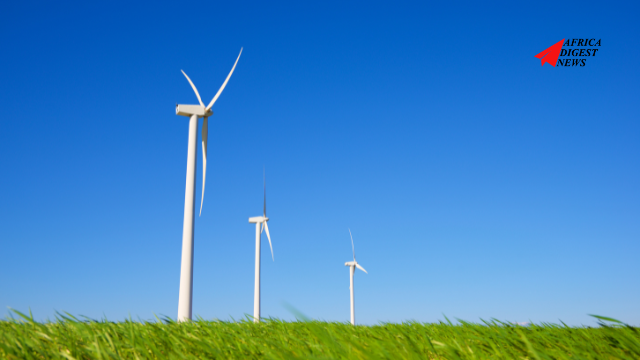
According to the Global Wind Energy Council (GWEC), the world saw a record-breaking 165 Gigawatts (GW) of new wind capacity installed in 2025, marking a 40% increase from the previous year.
This surge brought the total global wind capacity to an impressive 1,299 GW by the end of 2025, with 138 countries now integrating wind power into their energy mix [1]. This growth is a testament to wind energy’s resilience and its increasingly competitive position against traditional fossil fuels.
Global Leaders in Wind Energy Capacity (End of 2025)
The top five countries alone accounted for 86% of new capacity additions in 2025 and approximately 75% of the world’s total installed wind capacity. Their sustained investment and supportive policies have cemented their positions as global leaders.
| Rank | Country | New Capacity (2025, GW) | Total Capacity (End 2025, GW) |
| 1 | China | 120.5 | 640.5 |
| 2 | USA | 6.9 | 161.2 |
| 3 | India | 6.3 | 54.5 |
| 4 | Germany | 5.7 | 77.7 |
| 5 | Brazil | 2.3 | 36.0 |
China’s Unprecedented Dominance: China continues to be the undisputed global leader in wind power, having added an astonishing 120.5 GW in 2025 alone. This explosive growth reflects its long-term commitment to ambitious climate targets, aiming for peak emissions by 2030 and carbon neutrality by 2060.
China’s scale of deployment, driven by robust domestic manufacturing and supportive policies, is unparalleled and continues to reshape the global wind energy landscape.
The United States’ Steady Growth: The USA remains a significant player, with 6.9 GW of new onshore wind installations in 2025. This steady growth is underpinned by strong economic fundamentals and policy support, demonstrating the enduring strength of its wind industry. While its growth rate is not as dramatic as China’s, the sheer volume of its installed capacity solidifies its second-place position.
India’s Remarkable Surge: India has emerged as a major force, almost doubling its annual installations to a record 6.3 GW in 2025. This rapid expansion saw India surpass Germany in new capacity additions, positioning it as the third-largest market for new wind outside China.
India’s pledge to scale non-fossil fuel capacity to 500 GW by 2030 indicates that its upward trajectory in wind power is set to continue.
Germany’s European Leadership: Germany continues to lead Europe in total installed wind capacity, adding 5.7 GW in 2025. Its consistent investment in both onshore and offshore wind, coupled with a strong regulatory framework, makes it a cornerstone of Europe’s energy transition. While the EU-27 as a whole installed 15.1 GW, Germany’s contribution is pivotal to the continent’s renewable energy goals.
Brazil’s Latin American Prowess: Brazil stands out as the leading wind power producer in Latin America, installing 2.3 GW in 2025. Despite some slowdowns due to weak electricity demand and curtailment issues, Brazil’s vast land area and excellent wind resources position it for continued long-term growth in the sector.
Countries to Watch (Beyond the Top 5)
Beyond the top five, several other countries are making significant contributions and are poised for further growth:
- Türkiye: With 2.1 GW of new capacity in 2025, Türkiye is rapidly expanding its wind energy footprint, driven by strong domestic demand and supportive policies.
- Sweden: Adding 1.8 GW, Sweden continues its commitment to renewable energy, leveraging its natural resources for sustainable power generation.
- Spain: Spain’s 1.6 GW of new capacity in 2025 highlights its consistent investment in wind power, contributing significantly to Europe’s overall renewable energy targets.
- Saudi Arabia: Emerging as a surprising leader, Saudi Arabia installed 1.5 GW in 2025, including the record-breaking Dawadmi windfarm. Its ambitious plans for new manufacturing facilities and over 18 GW of onshore wind capacity between 2026 and 2030 signal a major new player in the global wind market.
- France: With 1.4 GW of new installations, France is steadily increasing its wind power capacity as part of its broader energy transition strategy.
Read Also: Engie and Pele Green Energy Power Up the National Grid with New Solar Capacity
The Future of Wind Power Leadership
The global wind energy landscape in 2026 is dynamic, characterized by rapid innovation and expanding deployment. While established giants like China and the USA continue to lead, the impressive growth in countries like India and Saudi Arabia demonstrates a broadening base of wind power leadership.
This diversification is crucial for accelerating the global energy transition, ensuring that wind energy plays an increasingly central role in meeting the world’s growing demand for clean, affordable, and reliable power.
By Thuita Gatero, Managing Editor, Africa Digest News. He specializes in conversations around data centers, AI, cloud infrastructure, and energy.