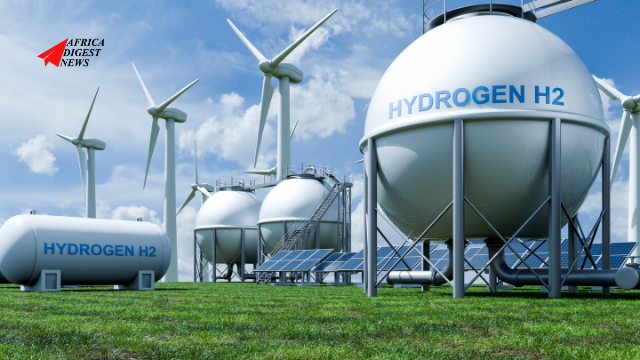
The African Development Bank has opened a new funding window targeting one of the most difficult stages in Africa’s emerging hydrogen sector: the gap between early project ideas and investment-ready infrastructure. Through its Sustainable Energy Fund for Africa, the bank has launched a call for proposals under its Green Hydrogen Programme. The initiative will provide up to $20 million in pre-investment support to a small number of selected projects across the continent.
The funding is not intended to build hydrogen plants. It is intended to make them possible. Across Africa, hydrogen proposals often stall before reaching financial close. Developers face expensive feasibility studies, engineering work, environmental preparation, and transaction structuring long before construction financing becomes available. Without support at this stage, projects rarely move forward.
SEFA’s programme targets exactly that constraint. Selected projects will receive reimbursable grants covering feasibility assessments, front-end engineering design, procurement preparation, and advisory services required to reach Final Investment Decision. These steps determine whether projects attract investors or remain proposals.
The timing is deliberate. Hydrogen is increasingly discussed as a pathway for exporting clean energy from Africa to global markets and reducing emissions in industries that cannot easily electrify. Steel production, fertilizer manufacturing, shipping fuels, and refining operations all fall into this category. Yet the continent still has few bankable hydrogen projects.
The programme attempts to change that pipeline. According to Daniel Schroth, the objective is to help early-stage proposals develop the technical and financial structure required to move forward. That includes strengthening project preparation standards so lenders can evaluate risks with confidence.
Read Also: Africa’s Energy Future Will Be Built at Home, Ethiopia Makes the Case in Vienna
This approach reflects how infrastructure finance is shifting. Rather than funding construction alone, development institutions are investing earlier in the project cycle. Preparation determines whether large-scale infrastructure happens at all. Supporting it changes what reaches the investment stage.
Germany’s backing of the programme signals growing European interest in future hydrogen imports from Africa. Several countries are already exploring supply agreements linked to renewable generation corridors across North, West, and Southern Africa.
But the opportunity remains unevenly distributed. Hydrogen production requires reliable renewable power, water access, transport infrastructure, and policy clarity. Only a limited number of locations currently meet those conditions. The programme’s competitive structure reflects that reality. It will support three to five projects rather than attempt continent-wide coverage.
Applications open on 10 April 2026 and close on 11 May 2026.
The outcome will indicate whether Africa’s hydrogen sector is ready to move from strategy documents to investment pipelines.If the selected projects reach financial close, they will define the first generation of large-scale hydrogen infrastructure on the continent.
By Thuita Gatero, Managing Editor, Africa Digest News. He specializes in conversations around data centers, AI, cloud infrastructure, and energy.