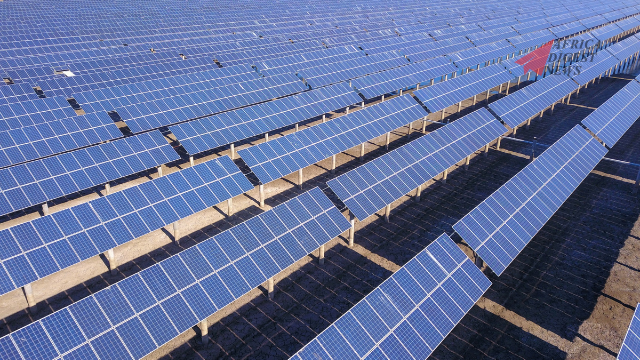
There is a paradox in solar operations: larger sites should have better performance due to professional operations and maintenance teams. Instead, the data shows the opposite. Underperformance grows faster on larger sites, and the gap is widening.
Sites between 100 and 200 MW saw a 5.3x increase in underperformance over five years, while small sites under 5 MW only saw a 2.3x increase. For sites larger than 200 MW, average underperformance more than tripled between 2019 and 2022, growing from 1.10% to 4.04%. This is not a coincidence. It is a structural problem that emerges as sites scale.
The root cause is systemic. In sites larger than 50 MW, 90% of power loss does not come from a few cracked panels. It comes from system-level equipment: inverters, strings, and combiners. When an inverter fails on a 100 MW site, you lose megawatts, not watts. A single string failure in a large combiner box can cascade into multiple megawatts of lost capacity before it is detected.
The second problem is the complexity tax. As sites grow, data volume increases exponentially. A 5 MW site generates manageable amounts of monitoring data. A 200 MW site generates terabytes of data daily. Humans cannot keep up.
Without AI-powered anomaly detection, critical failures go undetected for weeks or months. By the time a human operator notices a pattern in the data, the site has already lost millions in revenue.
Read Also: 5 Training Programs for Wind Turbine Technicians in South Africa in 2026
The third problem is operational friction. Large sites are often located far from where workers live. A “truck roll” to fix an inverter on a 200 MW site in a remote location costs $5,000 to $10,000 in travel and logistics. On a 5 MW rooftop site in an urban area, the same repair costs $500. This cost differential means large sites are more likely to defer maintenance, allowing problems to compound.
For asset owners, the implication is that size creates operational risk, not operational advantage. A 200 MW site requires more sophisticated monitoring, faster response times, and more aggressive preventive maintenance than a 5 MW site. The cost of achieving this sophistication is substantial, but it is cheaper than the alternative: watching a $300 million asset bleed 5-6% of its annual revenue to preventable failures.
For solution providers, large sites represent the highest-value market. A software solution that reduces underperformance by 1% on a 200 MW site is worth $2-3 million annually in recovered revenue. This is why the most sophisticated monitoring and AI solutions are concentrated on large sites. The market opportunity is simply larger.
By Thuita Gatero, Managing Editor, Africa Digest News. He specializes in conversations around data centers, AI, cloud infrastructure, and energy.


