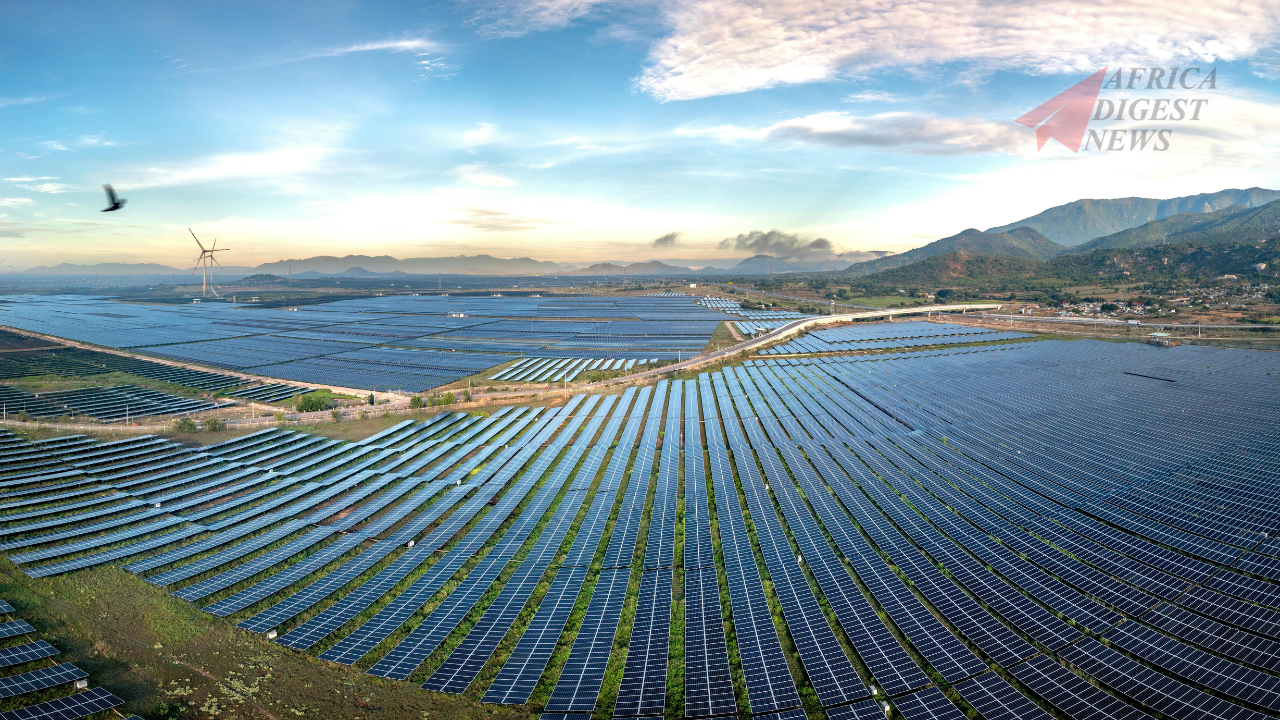
ENGIE’s 240 MW Corona solar PV project in South Africa’s Free State is expected to begin supplying electricity to the national grid in the fourth quarter of 2028, following its selection as a preferred bidder under Bid Window 7 of the Renewable Energy Independent Power Producer Procurement Programme (REIPPPP).
The project, located near Virginia in the Free State, is one of several utility-scale renewable energy developments awarded by the Department of Mineral Resources and Energy (DMRE) to help strengthen South Africa’s electricity supply and reduce the risk of power shortages. Once operational, Corona will deliver 240 MW of solar capacity to the grid, contributing to the country’s expanding renewable energy mix.
According to project timelines, construction of the Corona solar PV facility is scheduled to start in the fourth quarter of 2026. The development phase will include site preparation, panel installation, inverter and substation works, and grid connection infrastructure.
Following a roughly two-year construction period, the project is expected to reach commercial operation by Q4 2028, at which point it will begin delivering power under a long-term power purchase agreement with the national utility.
The extended timeline reflects both the scale of the project and broader grid integration challenges facing South Africa, particularly in regions where transmission capacity has become constrained due to the rapid growth of renewable energy development.
Read Also: Why simpler capital can be better than structured finance for off-grid solar projects?
Bid Window 7 forms part of government efforts to procure additional generation capacity to improve energy security, diversify the energy mix, and reduce reliance on coal-fired power stations. Large-scale solar projects such as Corona are increasingly viewed as essential to stabilising the grid during daytime peak demand while supporting long-term decarbonisation goals.
ENGIE, a multinational energy company with a growing renewable portfolio in South Africa, has positioned the Corona project as part of its broader strategy to support the country’s energy transition through utility-scale clean power investments.
In parallel with the Corona award, ENGIE has also been pre-qualified as one of seven bidders for South Africa’s first Independent Transmission Projects (ITP) auction, scheduled for 2026. The ITP programme is designed to attract private-sector investment into transmission infrastructure, addressing grid bottlenecks that have slowed the rollout of new generation capacity.
Transmission availability will be a key determinant of how quickly projects like Corona can be integrated into the grid once construction is completed.
If delivered on schedule, ENGIE’s Corona solar PV project will begin supplying power in late 2028, adding significant renewable capacity to South Africa’s grid at a time when demand growth, ageing coal assets, and grid constraints continue to place pressure on the power system.
The project underscores the growing role of large international developers in South Africa’s renewable energy market, as well as the increasing importance of aligning generation investment with transmission expansion.
By Thuita Gatero, Managing Editor, Africa Digest News. He specializes in conversations around data centers, AI, cloud infrastructure, and energy.


