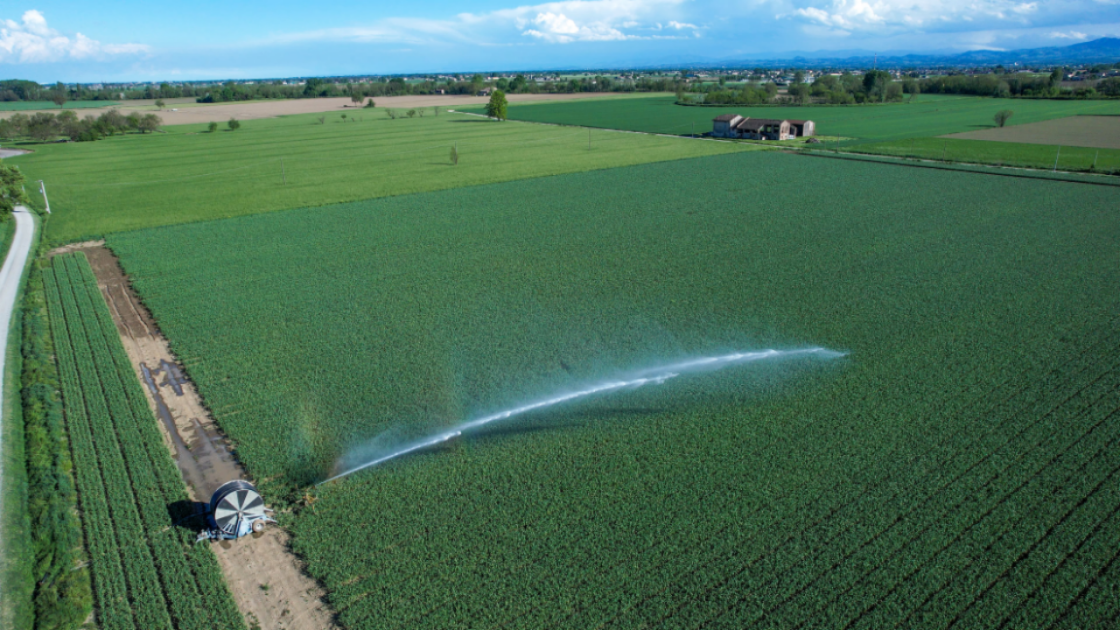
Climate-smart agriculture has entered African policy circles because the old agricultural model is breaking down. Rainfall patterns are shifting faster than planting cycles can adjust. Temperatures are rising in regions already operating at the edge of crop tolerance. Yields are becoming less predictable, while food demand keeps climbing.
This is not a future risk. It is already showing up in production data.
Research aggregated by the Intergovernmental Panel on Climate Change, the Gates Foundation, and Sesi Technologies projects that without adaptation, Africa’s output of staple crops such as maize and wheat could fall by up to 20 percent by 2050. That decline would hit a sector that employs more than half of sub-Saharan Africa’s workforce and feeds most of its population. When agriculture weakens, incomes fall, food prices rise, and governments absorb the pressure.
Climate-smart agriculture sits at the intersection of yield protection and income stability. It focuses on crop varieties that survive heat and drought, livestock breeds that perform under stress, and farming practices that conserve soil and water. These are adjustments to biological and climatic constraints, not philosophical shifts.
The African Development Bank has made a judgement call. Incremental improvement is no longer sufficient. Scale matters more than novelty. That logic underpins the Technologies for African Agricultural Transformation (TAAT) programme. Instead of funding isolated trials, the Bank has concentrated on spreading technologies that have already cleared performance thresholds. Over the past decade, TAAT-backed interventions have reached more than 13 million farmers and contributed to roughly 25 million tonnes of additional food production, according to the Bank’s data.
Nigeria illustrates how this approach works in practice. Under TAAT and the African Emergency Food Production Facility, improved wheat seeds and fertiliser were distributed alongside training and extension support. Wheat cultivation expanded from 11,820 hectares in 2021 to nearly 400,000 hectares by 2025, while yields rose by close to 30 percent in targeted regions. This expansion occurred under climate stress, not favourable conditions.
Adoption follows incentives and structure. Evidence from Ethiopia shows that farmers linked to cooperatives adopt climate-resilient practices at higher rates, with spillover effects to neighbouring farmers. Private companies have reinforced this pattern by bundling inputs with credit and weather information. In West Africa, telecom partnerships have enabled farmers to receive location-specific forecasts through basic mobile phones, improving timing decisions around planting and fertiliser use.
Finance remains the main bottleneck. Fertiliser, improved seeds, and irrigation systems require upfront capital that smallholder farmers rarely have. The Africa Fertilizer Financing Mechanism, hosted by the African Development Bank, addresses this by absorbing part of the credit risk. Between 2019 and 2025, its guarantees enabled the distribution of 145,772 metric tonnes of fertiliser across eight countries, reaching nearly one million farmers, with women accounting for over a third of beneficiaries.
Read Also: Solar Now Supplies a Tenth of Electricity in Thirteen African Power Systems
Many farmers using these inputs are unaware of the Bank’s involvement. That is intentional. The strategy relies on national systems, cooperatives, and private suppliers rather than branded programmes.
Climate-smart agriculture is being scaled because the cost of maintaining the status quo is now visible in yield losses, import bills, and rural incomes. The African Development Bank is acting on the assumption that food security under climate pressure is a structural problem. Delay compounds it.
By Thuita Gatero, Managing Editor, Africa Digest News. He specializes in conversations around data centers, AI, cloud infrastructure, and energy.


