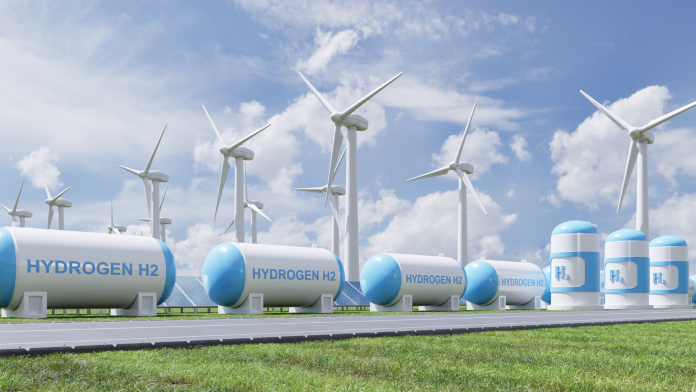
Green hydrogen is emerging as one of Africa’s most strategic energy exports. With abundant renewable resources, several countries are positioning themselves to produce green hydrogen at scale.
Here’s a look at the top 10 African nations leading or poised to lead in green hydrogen production and why they matter.
1. Mauritania
- Mauritania is arguably the continent’s most ambitious green hydrogen player. Its Aman project, backed by CWP Global and TotalEnergies, targets 1.7 million tonnes per year (tpa) of hydrogen production.
- The country leads in announced electrolyser capacity of nearly 94 GW, according to the African Green Hydrogen Report.
- Mauritania recently introduced a hydrogen-specific regulatory code to attract investment.
2. Egypt
- Egypt has one of the most mature pipelines: plans include a 4 GW electrolyser plant in the Suez Canal Economic Zone.
- Projects such as the Globeleq SCZONE Phase 2 aim for almost 1.9 Mtpa capacity.
- The government is actively promoting hydrogen through partnerships and export ambitions.
3. Namibia
- Namibia is a front-runner: its Tsau Khaeb project (3 GW) has a projected hydrogen output of 300,000 tpa.
- It hosts several “hydrogen valleys” in Kharas, Kunene, and Walvis Bay.
- The Africa Green Hydrogen Alliance (AGHA) includes Namibia, underscoring its strategic importance.
4. South Africa
- Johannesburg is central in hydrogen: major projects include a 780,000 tpa green ammonia plant and the “HySHiFT” renewable hydrogen initiative backed by German funding.
- South Africa is part of AGHA, coordinating green-hydrogen energy strategy at a continental scale.
- The country has strong industrial use cases (e.g., mobility, synthetic fuels), making hydrogen production highly strategic.
5. Morocco
- Morocco’s hydrogen ambitions include the 900,000 tpa AMUN project developed by CWP Global.
- Its national hydrogen strategy is backed by significant international investment (e.g., EU-Germany).
- Morocco also has a growing PtX (Power-to-X) portfolio, including ammonia-focused hydrogen facilities.
6. Djibouti
- Djibouti is proposing a 10 GW green hydrogen hub, according to major project announcements.
- It has partnered with Fortescue Future Industries to assess feasibility for large-scale production near Obock and Goubet.
- Its geopolitical position may serve export routes to the Middle East and Europe.
7. Tunisia
- A green hydrogen corridor (“Southern H₂ Corridor”) is being discussed, linking Tunisia to Europe.
- TotalEnergies and Verbund are planning a “H2 Notos” project to produce ~200,000 tpa initially, with potential to scale.
- Government strategy is aligned with broader North African hydrogen ambitions.
8. Algeria
- Algeria is gaining attention via AGHA membership and is exploring hydrogen-export infrastructure.
- While large-scale capacity is still emerging, its wind and solar potential make it a key candidate.
9. Kenya
- Kenya has several green hydrogen projects at feasibility stage, per recent sector analysis.
- Its renewable potential (especially wind) and growing energy demand make green hydrogen a strategic opportunity.
10. Ethiopia
- Ethiopia relies heavily on hydropower, giving it a strong low-carbon power base for future green hydrogen production.
- With AGHA expansion, Ethiopia is positioning itself among emerging green hydrogen nations.
Africa’s green hydrogen future is being built today. Production costs could be 30–60% lower than in Europe, according to joint IEA-World Bank estimates.
Most of these projects are still in development stages. As of early 2025, only a handful (in Egypt, Namibia, and South Africa) are operational or under construction.
If Africa plays its cards well through smart infrastructure deployment it could become a global green hydrogen powerhouse.


