By Thuita Gatero, Managing Editor, Africa Digest News. He specializes in conversations around data centers, AI, cloud infrastructure, and energy.
South Africa just made one of the most consequential energy decisions on the continent. The country has granted a 20-year operating license extension for Unit 2 of the Koeberg nuclear power plant, securing operations until 2045 and cementing its status as Africa’s only operational nuclear facility well into the mid-century.
This follows last year’s renewal for Unit 1. The message is clear: while the world debates the future of nuclear, South Africa is choosing certainty. In a continent where power grids are fragile and outages cost billions, baseload stability is economic survival.
Read Also: Egypt Greenlights 1.2GW Solar Push which Signals A New Phase in Africa’s Energy Ambition
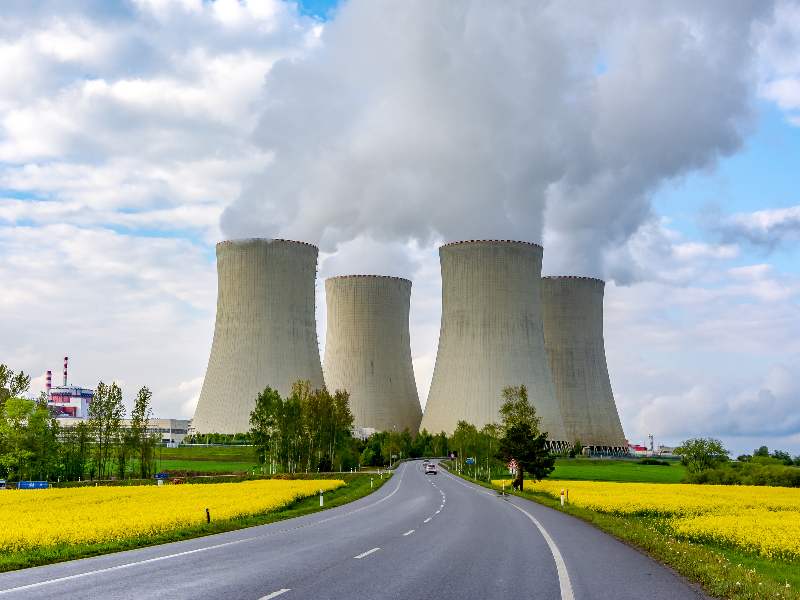
Koeberg, built in the 1980s near Cape Town, delivers 1,860MW of clean, dispatchable power enough to power millions of homes and stabilize a grid that has buckled under years of load-shedding. Without Koeberg, South Africa’s energy crisis would be exponentially worse.
“Koeberg’s 40-year milestone is proof of our ability to operate complex infrastructure safely and sustainably,” Eskom CEO Dan Marokane said.
In a country where public trust in infrastructure has been tested, nuclear remains one of the few systems that has consistently worked.
Africa’s energy story is rarely discussed on its own terms. The global narrative says “go renewable”. The African reality says “keep the lights on”. South Africa’s move underscores a strategic truth: the energy transition in emerging markets requires reliability before ideology.
Solar and wind are scaling rapidly and Egypt, Morocco, Kenya and Namibia are proving Africa can lead there too. But until storage scales, baseload still matters. Nuclear, like hydro, sits at a rare intersection: clean + continuous + industrial scale.
Across the continent, nuclear ambitions are rising:
- Egypt’s El-Dabaa plant: 4.8GW with Russian support underway
- Nigeria: talks on modular reactors for industry and grid support
- Rwanda & Ghana: early-stage nuclear tech pathways
Russia’s Rosatom remains the most aggressive foreign partner, but China and the UAE are positioning too. Africa is emerging as the next frontier not just for renewables but energy sovereignty. And sovereignty requires a diversified toolbox.


