Nairobi, Kenya – February 10, 2026 – Africa is currently navigating a complex, two-speed energy transition, a dynamic highlighted in the Global Solar Council’s (GSC) latest report. While both government-led, utility-scale projects and privately financed distributed solar systems are driving the continent’s renewable energy surge, a critical disparity in funding mechanisms is creating a significant imbalance.
The report reveals that approximately 82% of clean energy finance in Africa still originates from public and development sources, predominantly channeled towards large, grid-connected projects, leaving the rapidly expanding rooftop and commercial solar segments at a disadvantage.
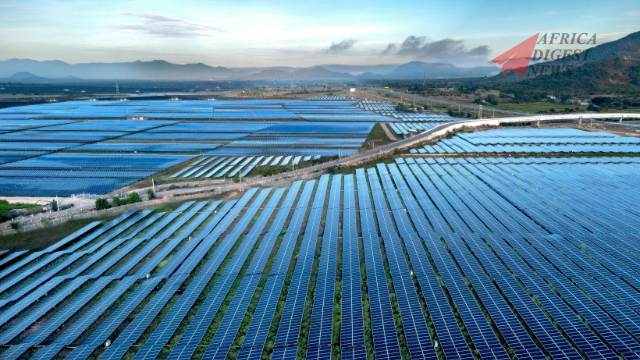
This dual transition presents a paradox. On one hand, there is a robust, government-led push for large-scale solar farms, often backed by international development finance institutions and public funds. These projects are essential for bolstering national grids and providing foundational power capacity.
On the other hand, a vibrant, privately financed transition is unfolding at the grassroots level, driven by households and businesses seeking reliable and affordable electricity through rooftop, commercial, and off-grid solar solutions. This consumer-led movement is evidenced by the massive import of 18.2 GW of solar modules in 2025, far exceeding utility-scale projections.
The core issue lies in the misalignment of financing models. Traditional finance structures are typically designed for large-scale infrastructure projects, characterized by substantial ticket sizes, long tenors, and often denominated in foreign currencies.
Read Also: Africa Targets 33 GW Solar Capacity by 2029: A 21% CAGR Fuels Ambitious Growth
These models are ill-suited for distributed solar projects, which require smaller, more flexible financing, shorter repayment periods, and crucially, local currency funding to mitigate foreign exchange risks for local developers and consumers. As a result, despite strong demand and improving technology economics, many consumer-led projects face higher financing costs or constrained access to capital.
This funding mismatch carries significant risks for Africa’s energy future. Without adequate and appropriate financing for distributed solar, the continent’s ability to rapidly close its energy access gap which affects over 600 million people, will be severely hampered. Moreover, it risks slowing the overall pace of deployment, increasing system costs, and limiting the economic value that solar can deliver in terms of job creation, local economic development, and enhanced energy resilience. The high stakes involve not just the pace of energy transition but also the equitable distribution of its benefits across the continent.
The GSC report emphasizes that realizing Africa’s full solar potential, projected to exceed 33 GW by 2029, will depend on aligning finance, planning, and regulation with the evolving market reality. This includes developing finance models specifically tailored for distributed and consumer-led solar, improving data collection to accurately reflect where and how solar is being deployed, and accelerating investment in storage, grids, and system flexibility.
The challenge now is to bridge this financing gap and ensure that Africa’s two-speed energy transition can converge into a unified, powerful force for sustainable development.
By Thuita Gatero, Managing Editor, Africa Digest News. He specializes in conversations around data centers, AI, cloud infrastructure, and energy.


