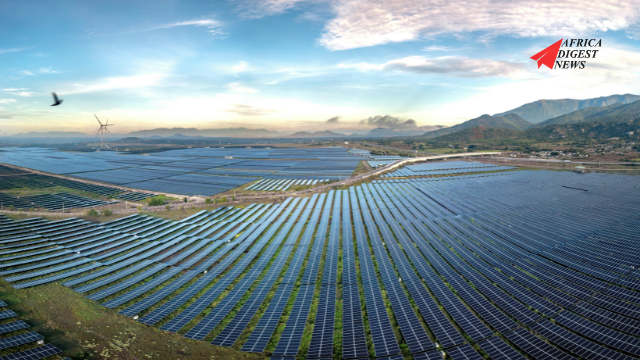
Africa’s energy transition is increasingly a question of who can finance infrastructure at scale, deliver technology at competitive prices and build the systems needed to support industrial growth. An analysis by the Observer Research Foundation (ORF) proposes closer energy cooperation among India, African countries and the United Arab Emirates (UAE), combining India’s manufacturing capabilities and technical expertise with Gulf capital and Africa’s demand for electricity and industrial infrastructure.
The opportunity extends beyond solar and wind projects to include battery storage, grid modernisation, green hydrogen, nuclear energy and critical minerals. For African economies, the significance is not simply attracting more foreign investment. It is building partnerships that convert financing into productive infrastructure, stronger domestic industries and more reliable electricity supply.
The case for this cooperation begins with a persistent mismatch between Africa’s energy needs and the cost of meeting them. More than 600 million people across the continent lack access to electricity, while energy projects face financing costs that can be several times higher than those in advanced economies. High borrowing costs make electricity more expensive to produce and can render otherwise viable projects financially unattractive. India offers a potential source of competitively priced equipment, engineering expertise and experience deploying renewable energy at scale.
The UAE brings investment capital, international financial networks and logistics infrastructure that can connect projects to markets and suppliers. African countries, meanwhile, provide the demand, resources and development opportunities that could make such partnerships commercially viable. The challenge is to align these advantages around projects that can attract capital without imposing unaffordable costs on electricity consumers.
The UAE’s role could be particularly important in connecting capital to projects that need substantial upfront investment. Gulf investors have expanded their presence in African infrastructure, energy and logistics, while India and the UAE have strengthened their economic relationship through trade and investment agreements. A trilateral framework could connect these existing relationships rather than requiring every project to build new partnerships from scratch.
It could also bring development finance institutions into transactions to reduce risk, support project preparation and attract private investors. Yet capital availability alone will not solve Africa’s financing problem. Investors still need credible power-purchase agreements, predictable regulation, viable utilities and confidence that projects will recover their costs. Without these conditions, even strong international partnerships may struggle to move from announced commitments to completed infrastructure.
The decisive issue for African countries is what they gain beyond the electricity generated. A partnership focused exclusively on importing equipment and financing foreign-developed projects could expand capacity without building sufficient local industrial capability. A more durable approach would include local manufacturing where commercially viable, technical training, technology transfer, African participation in project development and stronger regional supply chains for batteries, grid equipment and other energy technologies.
India’s experience with decentralised solar systems may also be relevant to rural electrification, while cooperation with South Africa could extend into green hydrogen and critical minerals. The proposed India-Africa-UAE framework remains an opportunity rather than an established trilateral energy financing mechanism. Its success should be measured by capital actually deployed, projects completed, electricity access improved and local economic value created.