Africa’s richest businessman, Aliko Dangote, has pledged $2 billion to develop a 250 MW solar power plant and a modern fuel storage terminal in The Gambia, marking what could become one of the country’s largest private infrastructure investments.
If realised, the project would significantly expand The Gambia’s electricity generation capacity, strengthen fuel security, and accelerate its transition toward renewable energy. A plan to address two energy challenges
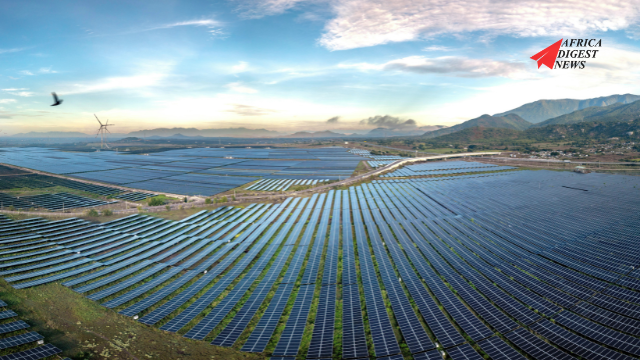
The proposed investment combines two major energy assets. The first is a 250 MW solar photovoltaic plant, which would become the largest solar facility ever developed in The Gambia. The second is a modern fuel storage terminal designed to improve the country’s petroleum reserves and reduce supply disruptions. Together, the projects aim to tackle two of The Gambia’s biggest energy challenges: limited electricity generation and vulnerability to imported fuel supplies.
The Gambia continues to rely heavily on imported electricity and thermal generation, leaving the country exposed to fuel price volatility and power shortages. Although renewable energy is growing, the country’s largest solar project currently under development, the 150 MW Soma Solar Plant, is not expected to be completed until around 2030.
A new 250 MW solar facility would therefore represent a significant increase in available generation capacity and could help reduce electricity costs while improving supply reliability for households and businesses. The investment also aligns with The Gambia’s goal of increasing renewables’ contribution to its electricity mix from 13% in 2024 to 30% by 2030.
Alongside the solar project, Dangote plans to develop a modern fuel storage terminal. The facility would enable The Gambia to maintain larger strategic fuel reserves, reducing the risk of supply disruptions while improving price stability across the domestic fuel market. For a country that depends heavily on imported petroleum products, expanding storage capacity is viewed as an important part of strengthening national energy security.
The proposal also reflects Dangote Group’s growing interest in regional energy infrastructure beyond Nigeria. Having invested heavily in refining, fertiliser production, cement manufacturing and industrial infrastructure, the company is now positioning itself as a broader energy player across West Africa. Dangote was accompanied during the announcement by First Bank Group CEO Olusegun Alebiosu, signalling that Nigerian industrial capital and financial institutions could play a central role in financing the project.
Read Also: Eskom’s Solar Deadline Is Weeks Away: Here’s How Homeowners Can Stay Compliant
The investment has not yet reached financial close. The pledge was made during meetings held alongside the African Caucus 2026 in Banjul, where President Adama Barrow welcomed the proposal and instructed government ministries to begin working with Dangote’s technical teams. Before construction can begin, both parties must complete feasibility studies, negotiate binding agreements, establish implementation structures and secure project financing. The government has also not disclosed how the $2 billion investment will be divided between the solar plant and the fuel storage terminal, nor has it published a construction timeline.
If completed, the project would represent one of the most significant private-sector energy investments in The Gambia’s history. Beyond increasing electricity generation, it would diversify the country’s energy mix, strengthen fuel security, support national renewable energy targets and demonstrate how private African capital can play a larger role in financing strategic infrastructure across the continent.