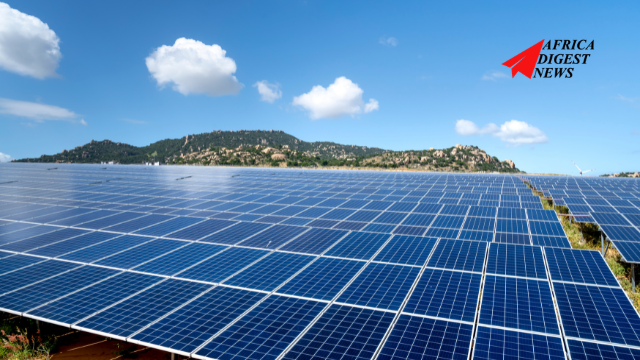
Africa has some of the world’s best solar resources, but it remains one of the smallest renewable energy markets. According to the International Renewable Energy Agency (IRENA), Africa added only a small fraction of the world’s new renewable energy capacity in recent years, despite having vast untapped solar potential. The problem is no longer the technology. Solar panels are cheaper than ever. The biggest obstacle is the cost of financing.
The cost of utility-scale solar modules has fallen by more than 80% over the past decade, making solar one of the lowest-cost sources of new electricity generation globally. Yet a solar project in Africa can produce significantly more expensive electricity than an identical project in Europe or the Middle East.
The International Energy Agency (IEA) estimates that financing accounts for 30–50% of the total cost of many utility-scale solar projects in emerging markets. In high-risk markets, that share can be even higher. Consider two identical 100 MW solar plants, each costing US$100 million to build.
- Project A secures financing at 4% over 20 years.
- Project B secures financing at 12% over the same period.
The engineering is identical. The equipment is identical. The sunlight is identical. But Project B will produce electricity at a substantially higher cost simply because its financing is more expensive. Across many African markets, renewable energy projects routinely face borrowing costs of 10–15%, while comparable projects in developed markets often secure debt below 5%. That financing gap is what investors refer to as the Africa Premium.
Several factors increase financing costs across African energy markets:
- Currency risk, as project revenues are earned in local currencies while debt is often denominated in US dollars or euros.
- Utility credit risk, where financially constrained state utilities increase concerns about timely payments under power purchase agreements.
- Sovereign risk, including political uncertainty and macroeconomic volatility.
- Limited local capital markets, which restrict access to long-term local-currency financing.
Each layer of risk increases the interest rate investors demand. For capital-intensive technologies like solar, even small increases in borrowing costs can dramatically raise electricity tariffs. Africa attracted billions of dollars in renewable energy investment in recent years, yet deployment remains well below what the continent needs. The gap is driven by a lack of affordable finance. When developers cannot secure long-term, competitively priced debt, projects are delayed, scaled down or cancelled altogether.
Read Also: Grid Gap in Focus as Southern African Utility Leaders Join AEW Power Africa Today
Reducing the cost of capital will require more than additional investment commitments. It will require better risk-sharing mechanisms, including:
- Partial risk guarantees.
- Political risk insurance.
- Blended finance structures.
- Stronger utility balance sheets.
- Deeper domestic bond and pension markets.
- More predictable regulatory and tariff frameworks.
These tools reduce it enough to attract private capital at lower interest rates. Africa has a financing problem. Until the cost of capital falls, the continent will continue to underperform despite having some of the world’s strongest solar potential. The next breakthrough in Africa’s energy transition is unlikely to come from a more efficient solar panel. It will come from cheaper, longer-term finance that allows existing technology to be deployed at the scale the continent needs.