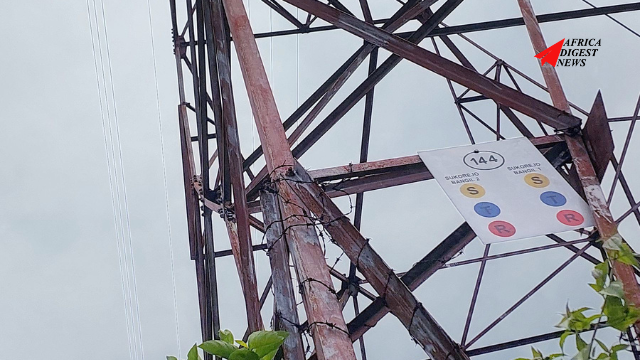
By April 2026, the focus of African energy finance has expanded beyond national borders to the development of Regional Power Pools.
As the African Continental Free Trade Area (AfCFTA) matures, investors are increasingly looking at “Interconnection Deals”, large-scale infrastructure projects that allow for the seamless trade of electricity between nations.
Financing the “Super-Grid”
The scale of these projects is immense, often requiring billions of dollars in multi-country financing. In early 2026, the Southern African Power Pool (SAPP) announced the financial close of a $1.2 billion transmission corridor connecting the surplus hydro power of the DRC to the industrial heartlands of South Africa.
This deal was structured as a “Multi-Sovereign Project Finance” model, where the debt is shared across multiple national utilities but managed by an independent regional entity. This structure mitigates the risk of any single country defaulting and ensures that the project serves the collective interest of the region.
The Rise of Regional Infrastructure Funds
To support these cross-border deals, several Regional Infrastructure Funds have emerged in 2026. These funds are specifically designed to handle the legal and regulatory complexities of multi-jurisdictional projects.
They provide “Project Preparation Facilities” (PPFs) that fund the expensive feasibility studies and legal frameworks required before a cross-border deal can even be pitched to commercial banks.
Read Also: The Rise of Blended Finance: De-Risking Large-Scale Renewable Projects in 2026
By professionalizing the “pre-development” phase, these funds are creating a pipeline of bankable regional projects that were previously considered “too complex” to finance.
Energy Trade as a De-Risking Strategy
For investors, cross-border trade is actually a de-risking strategy. A power plant that can sell to three different national markets is far more resilient than one tied to a single national utility.
In 2026, we are seeing “Export-Oriented Power Projects” where a solar farm in Namibia is financed based on a PPA with a mining company in Zambia. This “regional off-take” model provides a diversified revenue stream that is highly attractive to international lenders.
As the “African Super-Grid” takes shape in 2026, the financing of energy trade is becoming the most dynamic sector of the African investment landscape.
By Thuita Gatero, Managing Editor, Africa Digest News. He specializes in conversations around data centers, AI, cloud infrastructure, and energy.


