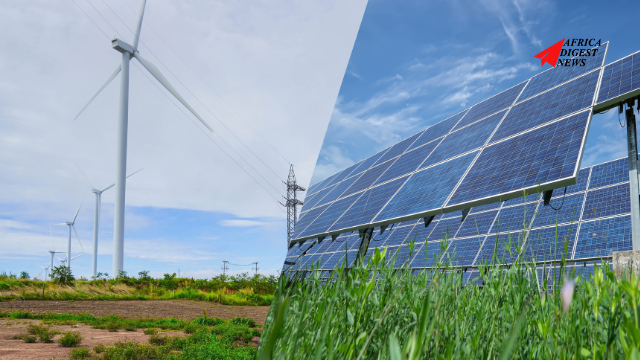
In semi-arid eastern Kenya, Kitui County has long struggled with erratic rainfall and recurring drought. Yet recent solar irrigation initiatives are quietly reshaping livelihoods.
Kitui’s climate makes rain-fed farming unreliable. Many households historically relied on maize and sorghum, producing barely enough for consumption. During drought years, food aid was common.
Solar-powered irrigation is changing that equation.
The Intervention
NGOs and private solar firms introduced small solar pumps combined with drip irrigation systems. Farmers were trained on crop selection, irrigation scheduling, and market linkages.
Instead of relying solely on maize, farmers began cultivating:
- Tomatoes
- Onions
- Kale
- Watermelons
These crops fetch higher prices in urban markets such as Nairobi.
Read Also: Which Kenyan Banks Could Finance Solar Irrigation at Scale?
Results Observed
Farmers reported:
- 3–5 harvest cycles annually
- Significant income increases
- Improved household food security
- Greater resilience during drought
Women-led groups particularly benefited, gaining control over horticultural income streams.
Why It Worked
- Training accompanied technology
- Market access was secured
- Farmers operated in groups
- Maintenance support was available
Solar irrigation alone does not transform livelihoods. Integrated support systems do. Kitui’s success is replicable across other ASAL counties like Turkana and Garissa, provided financing and extension services are scaled.
By Thuita Gatero, Managing Editor, Africa Digest News. He specializes in conversations around data centers, AI, cloud infrastructure, and energy.