Storage and flexibility attracted $666 million in 2025, the smallest category in the Electron Intelligence report’s investment breakdown. This was a signal about where Africa’s energy transition stands.
The allocation sequence tells a story: Generation ($8.15B) first, Enablers ($2.41B) second, Grid and Networks ($1.56B) third, Access ($834M) fourth, Storage ($666M) last. This reflects the phase of infrastructure build-out. Africa is in a capacity-first phase. Optimization comes later.
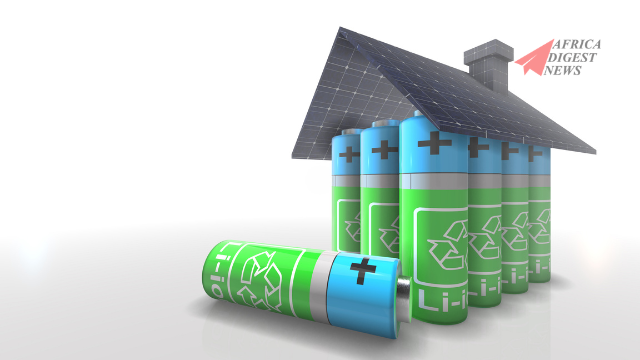
Why does this matter? Storage and flexibility technologies—batteries, pumped hydro, demand response systems become valuable when grids have high renewable penetration and need to manage intermittency. They are the tools for optimizing existing infrastructure. But optimization is a second-order problem. First-order problems are capacity availability and grid connectivity.
Africa still faces first-order problems. Many countries lack sufficient generation capacity to meet demand. Transmission networks are incomplete, with generation in one region and demand in another. Grid operators are still learning to manage variable renewable sources. In this context, storage is premature. It is not that storage is unimportant. It is that the grid is not ready to benefit from it.
Read Also: Africa’s Solar Sector Surges 54% in 2025, Driven by Dual Transition
The $666 million invested in storage reflects this reality. Capital is selective, concentrated in projects where storage solves an immediate problem: a grid operator managing high solar penetration, a mining operation needing reliable power, a utility with specific peak-shaving requirements. These are exceptions, not the norm.
For storage and flexibility companies, the signal is clear: the mass market for your products is not yet here. The market that exists is niche and high-value. Companies that succeed in this phase will be those that solve specific problems for specific customers, not those betting on a future where storage is ubiquitous.
The $666 million is a realistic assessment of where Africa’s grid infrastructure stands. As generation capacity increases and renewable penetration rises, storage will become more valuable. But that phase is ahead. For now, the binding constraint remains capacity and connectivity, not optimization.
By Thuita Gatero, Managing Editor, Africa Digest News. He specializes in conversations around data centers, AI, cloud infrastructure, and energy.