Understanding how much electricity South Africa needs and why that number isn’t fixed requires unpacking both technical definitions and economic realities. Demand isn’t simply a single figure; it fluctuates with behaviour, weather, technology, and the mix of generation available on the grid.
How Electricity Demand Is Measured in South Africa
Electricity demand in South Africa is tracked in several ways. Two of the most relevant are average demand — the total energy consumed over a period and peak demand — the highest power draw at any point in time. Peak demand is critical because the grid must be able to meet that instantaneous load to avoid instability or outages.
Seasonal patterns also matter. Winter evenings typically see higher demand as people heat homes and run lighting and appliances. Conversely, demand dips during warmer months or at times of high solar generation.
What “Peak Demand” Really Means
Peak demand represents the maximum instantaneous power load in a given period. For example, Eskom’s own forecasts put evening peak demand at around 21,511 MW in early January 2026, with available capacity near 26,861 MW, giving a buffer above current needs.
Peak hours exert stress on the system because generation and transmission must be ready to supply that maximum load at all times. When supply margins are tight, as they were during frequent load-shedding years even modest surges in peak demand can precipitate outages.
How Much Power South Africa Needs Today
South Africa’s actual electricity usage has been shifting. According to a Council for Scientific and Industrial Research (CSIR) report, overall electricity demand in 2024 was slightly lower year‑on‑year, with peak demand declining from roughly 33.9 GW to 33.5 GW and energy consumption around 219.6 TWh.
This trend reflects structural changes in the economy, behaviour, and generation mix. Historically, heavy industry particularly mining and metallurgical sectors drove much of national electricity demand. South Africa’s role as Africa’s most industrialised economy means that industrial consumption accounts for a significant share of total demand.
Residential and commercial consumption, by contrast, tends to be less volatile but still influenced by broader economic conditions. When businesses cut output, for example during slowdowns or tariff spikes, overall grid demand can fall even as population and economic activity eventually grow.
Why Electricity Demand Keeps Changing
Economic Growth and Industrial Activity
Electricity demand is tightly linked to economic activity. During downturns, factories produce less and commercial buildings consume less power. Even when the economy recovers, demand patterns can shift permanently if sectors grow at different rates or adopt more efficient technologies.
Rooftop Solar and Self‑Generation
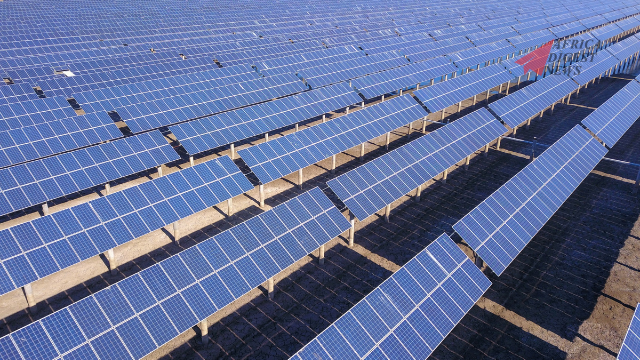
One of the most significant shifts in recent years is the rapid adoption of rooftop solar and embedded generation. By mid‑2025, privately owned solar PV capacity in South Africa had ballooned to more than 7,300 MW, exceeding the combined utility‑scale renewables on the grid.
This private generation doesn’t always show up in official grid demand figures, but it directly reduces the load Eskom must meet, especially during daylight hours. During festive season periods, Eskom even took offline nearly 13,675 MW of generating capacity because of lower demand and high solar output, illustrating how self‑generation is reshaping demand curves.
Read Also: Solar Now Supplies a Tenth of Electricity in Thirteen African Power Systems
This has a key implication: a reduction in grid demand does not necessarily mean energy needs have disappeared, many parts of the economy are now meeting those needs behind the meter.
Energy Efficiency and Technology Shifts
Improved efficiency in appliances, lighting, and industry also reduces overall consumption. As households and firms invest in LED lighting, efficient HVAC systems, and smart energy management tools, peak demand pressure can ease, even as more devices and digital services are used.
Why Demand Forecasting Is So Difficult
Forecasting electricity demand reliably remains a challenge because it involves unpredictable variables:
- Weather — extreme heat or cold drives spikes in usage.
- Economy — growth or contraction alters consumption patterns.
- Behavioural shifts — remote work, electrification of transport, or solar adoption can materially change when and how electricity is used.
FAQs
How much electricity does South Africa use per day?
National consumption is best expressed in terawatt‑hours (TWh). In 2024, South Africa’s total electricity use was around 219.6 TWh.
Why does demand drop even when the population grows?
Population growth doesn’t always translate to proportional grid demand increases if efficiency improves or self‑generation displaces utility supply.
Does rooftop solar reduce load shedding?
It can help relieve pressure on the grid at peak times by reducing demand from the utility, but grid stability still depends on a mix of generation and reliable transmission.
Why is winter demand higher?
Colder temperatures increase heating load and lighting demand in the evenings, pushing up both average and peak consumption.
By Thuita Gatero, Managing Editor, Africa Digest News. He specializes in conversations around data centers, AI, cloud infrastructure, and energy.