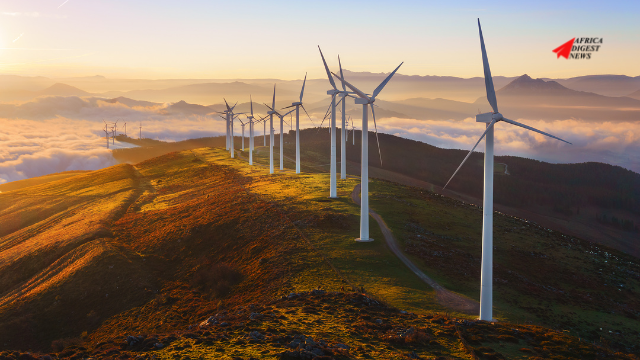
Africa’s renewable energy sector continued to expand in 2025, supporting an estimated 344,000 jobs across the continent, according to the latest report by the International Renewable Energy Agency (IRENA) in collaboration with the International Labour Organization (ILO).
While Africa represents a small portion of the global renewable energy workforce, the growth underscores the increasing role of clean energy in economic development and employment creation.
Globally, renewable energy employment reached 16.6 million in 2024, up from 7.3 million in 2012. Solar photovoltaics remain the largest employer worldwide, generating 7.2 million jobs, followed by liquid biofuels (2.63 million), hydropower (2.26 million), and wind power (1.9 million). In Africa, solar and wind technologies are the primary drivers of job creation, reflecting both the continent’s abundant resources and the growth of large-scale renewable projects.
South Africa stands out as a regional leader in renewable energy employment, with 86,531 full-time equivalent jobs supported in 2024. Most of these positions are concentrated in construction, operations, and maintenance, largely linked to the Renewable Energy Independent Power Producer Procurement Programme (REIPPPP).
The program has attracted significant investment in solar and wind farms, creating local employment while contributing to the country’s energy transition goals. Other countries, including Morocco, Egypt, and Kenya, are also expanding their renewable energy footprints, with both utility-scale and off-grid solar projects providing new job opportunities.
IRENA notes that the reported employment figures likely underestimate the true scale of jobs in Africa. Informal work, small-scale renewable projects, and emerging sectors such as mini-grids and distributed solar solutions are difficult to capture fully but contribute meaningfully to livelihoods, particularly in rural communities.
Read Also: Why simpler capital can be better than structured finance for off-grid solar projects?
Off-grid and pay-as-you-go solar systems have also generated direct employment in sales, installation, and maintenance, creating economic opportunities in areas historically underserved by the national grid.
Despite the growth, challenges remain for Africa’s renewable energy workforce. Skills shortages are evident across manufacturing, engineering, and project management, limiting the pace at which projects can be deployed.
Public policy, investment in training, and targeted workforce development strategies are essential to sustain long-term employment growth. IRENA emphasizes the importance of coordinated national plans to ensure that renewable energy deployment also delivers local economic benefits, not just environmental gains.
The report underscores that renewable energy is no longer only an environmental or technical priority but a strategic source of employment. Africa’s clean energy transformation is creating jobs, strengthening local economies, and helping to position the continent as a growing player in the global low-carbon economy.
By Thuita Gatero, Managing Editor, Africa Digest News. He specializes in conversations around data centers, AI, cloud infrastructure, and energy.