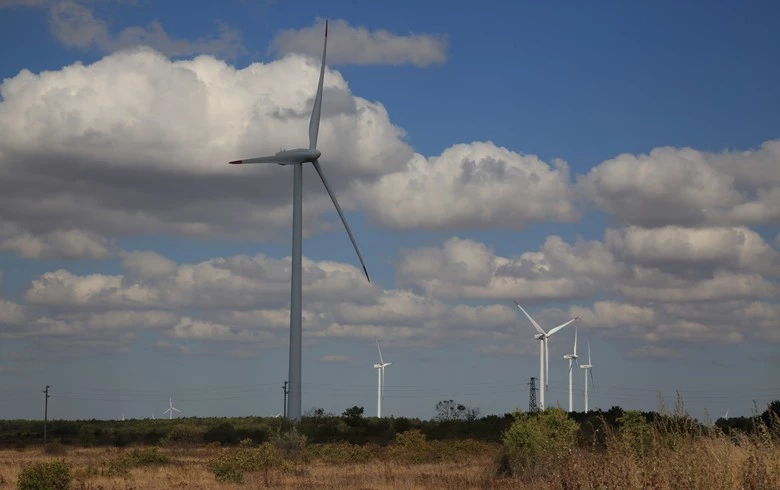
Cabo Verde has commissioned 13.5 MW of new wind turbines and 26 MWh of battery energy storage systems (BESS) across multiple islands, expanding one of Africa’s most studied renewable energy public-private partnerships.
The additions form the latest phase of the Cabeolica project, which has been central to the country’s electricity supply for more than a decade.
The expansion introduces new wind units on Santiago, while the BESS installations are spread across four islands to improve system stability and reduce reliance on thermal backup. According to the European Investment Bank (EIB), a key financier of the development, the upgrades are expected to raise the share of wind power in Cabo Verde’s electricity mix from around 20% to approximately 30% once fully operational.
Cabeolica operates through a public-private partnership (PPP) between the government, the national utility Electra, and private investors. The model has been widely referenced as an operational example for small island states seeking to integrate high levels of variable renewable energy without compromising grid reliability.
For this phase, the EIB committed over €39 million in financing through its development arm, EIB Global, supported by guarantees under the Global Gateway framework. The African Development Bank is co-financing the program with approximately €19.6 million, providing long-term debt to the project company.
The EIB’s involvement dates back to 2010, when it issued a €28 million loan to fund the original wind farms assets that now supply nearly a fifth of Cabo Verde’s electricity.
The choice to combine new wind capacity with distributed BESS marks a shift toward more advanced grid planning. The storage systems will manage fluctuations in wind output, reduce curtailment, and help maintain frequency stability in a geographically fragmented grid.
Cabo Verde’s grid is split across several islands, which limits the benefits of large centralised generation. The BESS rollout is designed to solve two operational challenges:
- Smoothing variability from expanding wind generation, particularly as output surges during high-wind periods.
- Reducing diesel dependence, which remains one of the country’s highest operating costs in the power sector.
By enabling higher penetration of wind power, the project reduces fuel imports and insulates the system from international price volatility—a major pressure point for small island economies.
Read Also: TDF and World Bank Back ASCENT to Deliver 350,000 Clean Energy Systems to 1.8 Million People
EIB Vice-President Ambroise Fayolle, responsible for operations in Cabo Verde, said the project demonstrates how targeted financing can help small island states integrate large shares of renewable power without compromising supply security. “The Cabeolica wind project has already been a game changer for Cabo Verde’s progress toward its renewable energy goals,” he noted. “It is a model for small island states to harness wind power potential for clean energy production.”
Beyond the immediate energy gains, the upgrade positions Cabeolica as a reference case for island states managing the transition to variable renewables. The project pairs a PPP structure with multilateral financing and modular grid assets—an approach that can be adapted in similar markets where supply security and fuel cost exposure remain key concerns.
Cabo Verde’s next steps will likely focus on integrating more storage, strengthening inter-island grid links, and exploring hybrid systems that allow higher renewable penetration without compromising reliability.
By Thuita Gatero, Managing Editor, Africa Digest News. He specializes in conversations around data centers, AI, cloud infrastructure, and energy.