The scale of AI energy consumption is staggering. Suppose you wanted to power AI at 200–300 gigawatts per year. On Earth, that is almost unimaginable. For perspective, the entire United States consumes around 460 gigawatts per year. Deploying AI at 300 gigawatts would consume roughly two-thirds of all U.S. electricity. Building new power plants at this scale is neither practical nor fast enough to support exponential AI growth.
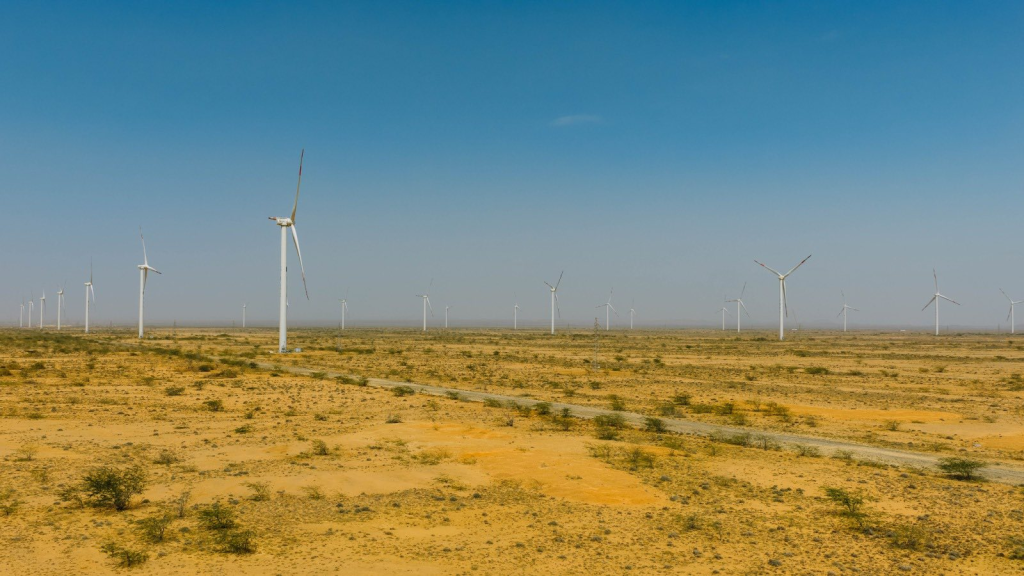
Now consider pushing further, to a terawatt per year. That is beyond the realm of Earth-bound energy infrastructure. There simply isn’t enough space, materials, or grid capacity to produce and distribute this much power. Cooling, land, and transmission challenges make terrestrial scaling infeasible. Even the fastest-growing renewable projects, solar or wind, would struggle to keep up. The math is clear: if humanity wants to scale AI beyond tens of gigawatts, Earth is no longer the solution.
Space changes the game. The Sun continuously emits massive amounts of energy, far more than all human activity can use on Earth. Satellites equipped with solar arrays can capture sunlight uninterrupted, 24/7. There is no night, no weather, no seasonal downtime. This eliminates the need for batteries or energy storage for short periods: power is constant. In orbit, solar energy can be harvested efficiently, transmitted or converted to electricity for AI operations directly, and scaled almost indefinitely.
The advantages go beyond quantity. Continuous solar in space simplifies operations. On Earth, power generation must balance supply and demand, peak loads, and intermittent renewables. In space, AI can rely on a steady, reliable energy supply. Coupled with natural cooling through radiation, orbiting AI systems offer both energy efficiency and operational stability far beyond what terrestrial data centers can achieve.
Consider the implications. AI at the terawatt scale would enable computation and automation at levels unimaginable today. Global-scale climate modeling, energy optimization, space exploration, and interplanetary infrastructure management would become feasible. Scaling this energy on Earth would require massive, impractical industrial efforts, thousands of new power plants, gigantic cooling systems, and vast land use. In space, it requires satellites and solar arrays, engineering challenges that are simpler and more efficient relative to energy output.
Read Also: The Cooling Advantage of AI Chips in Space
The conclusion is clear: the future of high-scale AI energy is off-planet. Earth-bound infrastructure is limited by physics, land, and materials. Space offers continuous sunlight, passive cooling, and near-unlimited scalability. Any attempt to build terawatt-scale AI on Earth is doomed before it starts. The horizon of computation and energy management moves upward, to orbit, where the Sun is always shining, and humanity can finally scale intelligence and energy together.
For anyone thinking about the future of energy and AI, the lesson is stark: space is not optional. It is the only feasible platform for computation and energy at the scale necessary to match civilization’s ambitions. The sooner companies and governments embrace this reality, the sooner we can move from theoretical limits to practical, orbiting AI infrastructure.
By Thuita Gatero, Managing Editor, Africa Digest News. He specializes in conversations around data centers, AI, cloud infrastructure, and energy.